
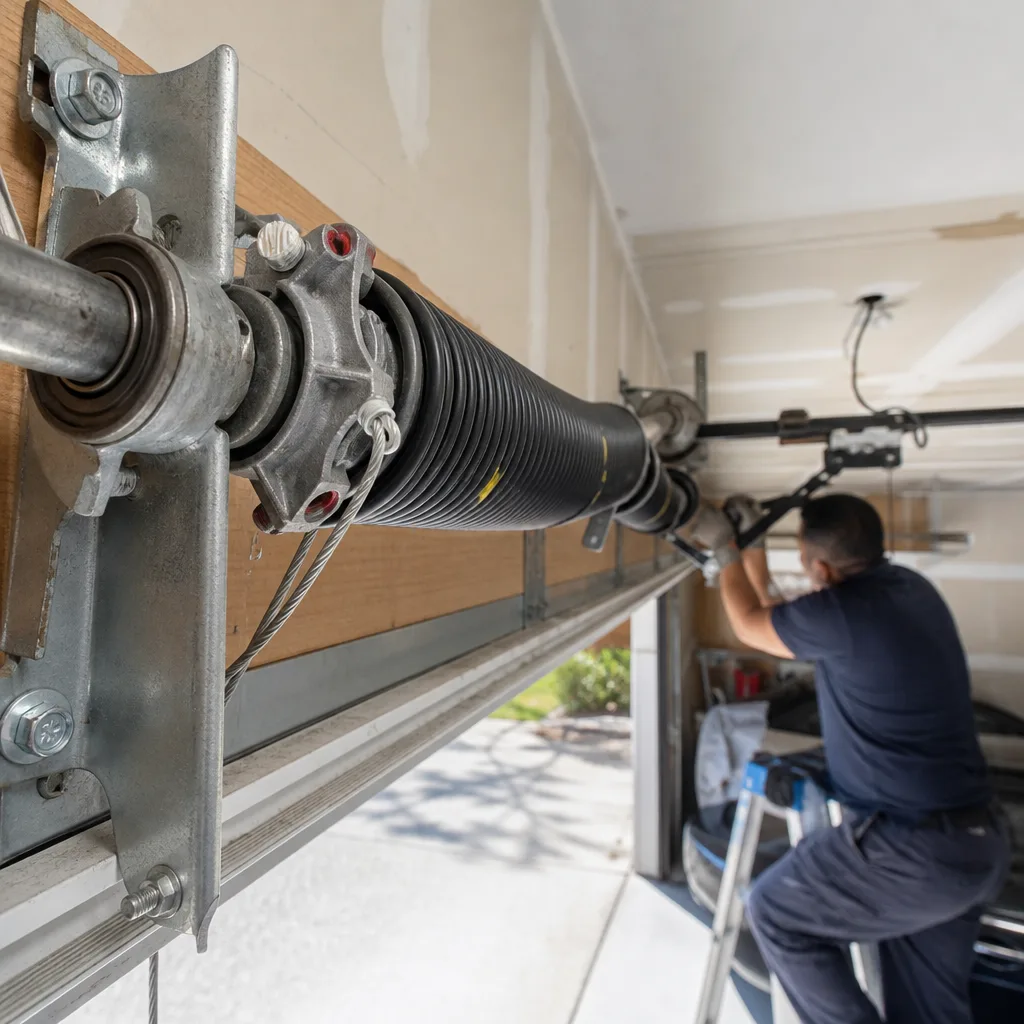
Last updated October 16, 2026
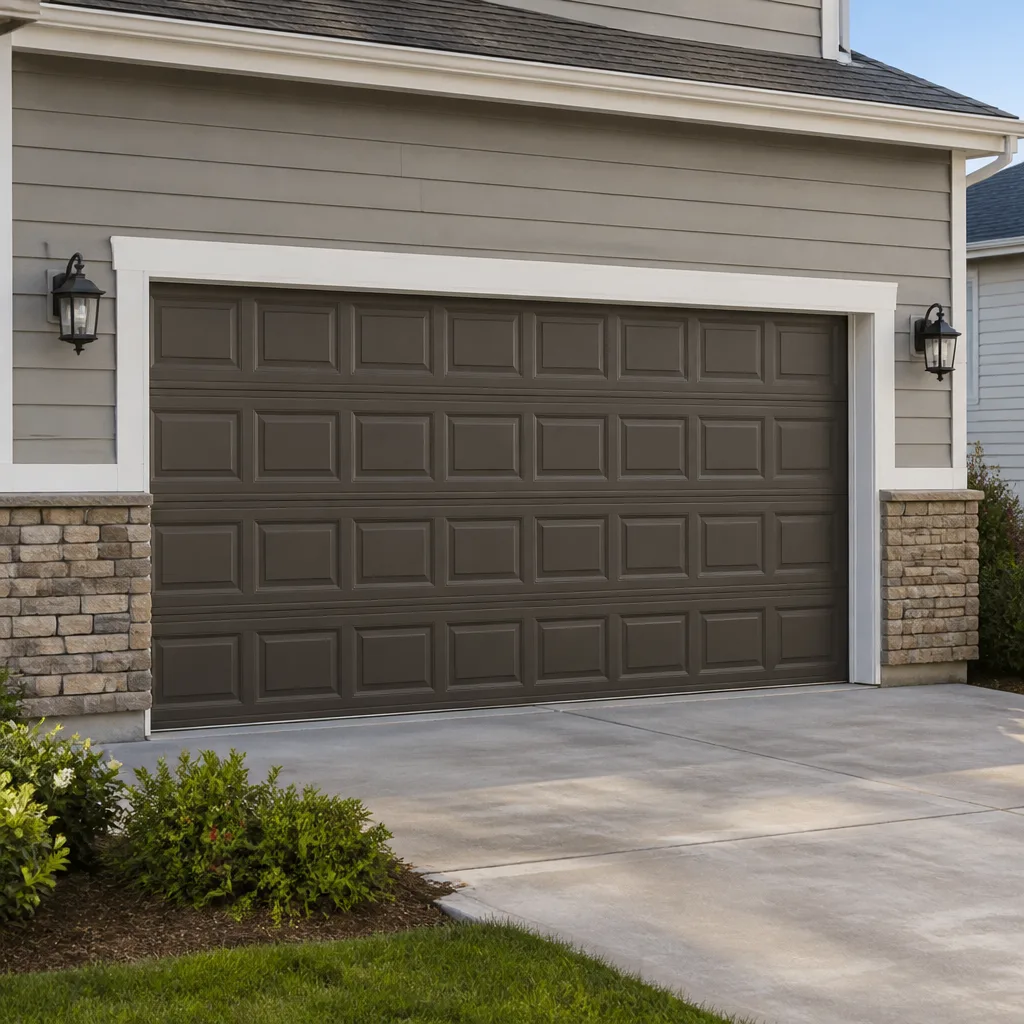 Raised-panel steel
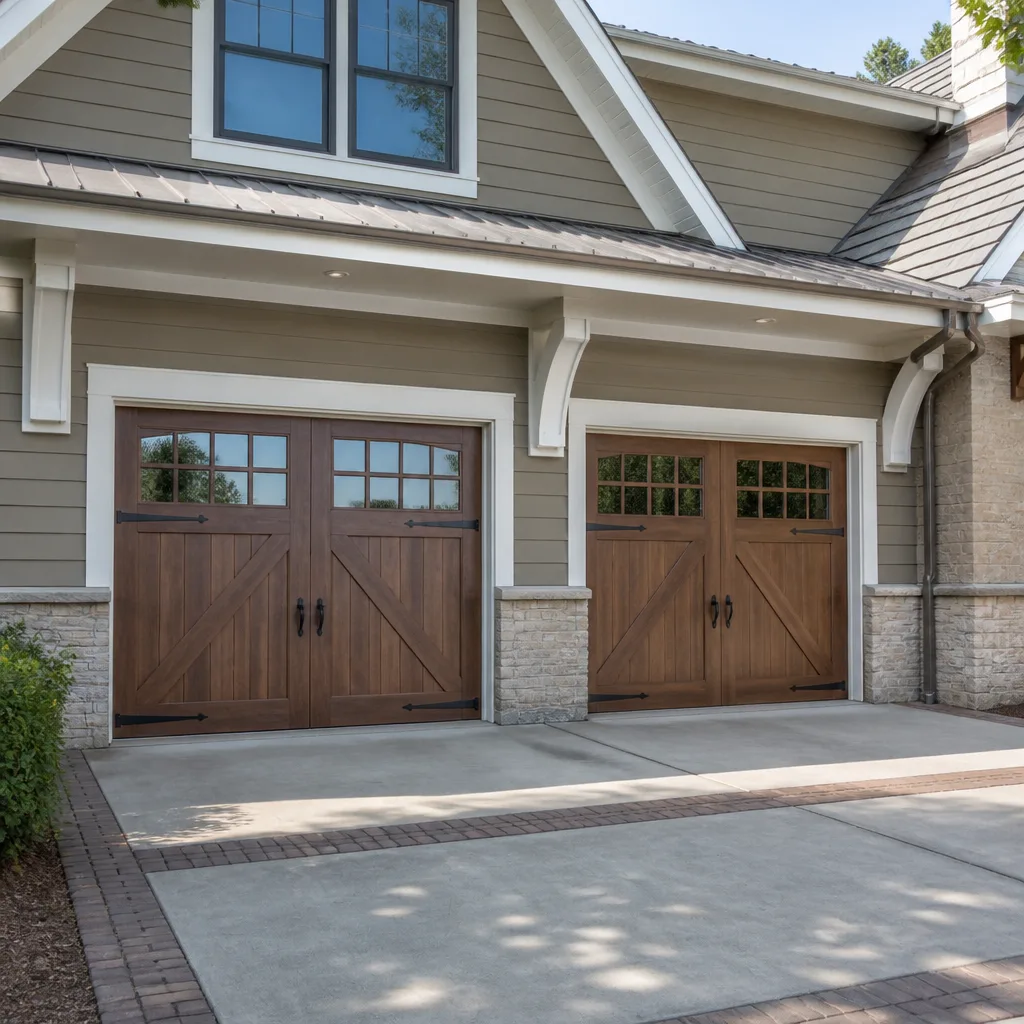 Carriage house
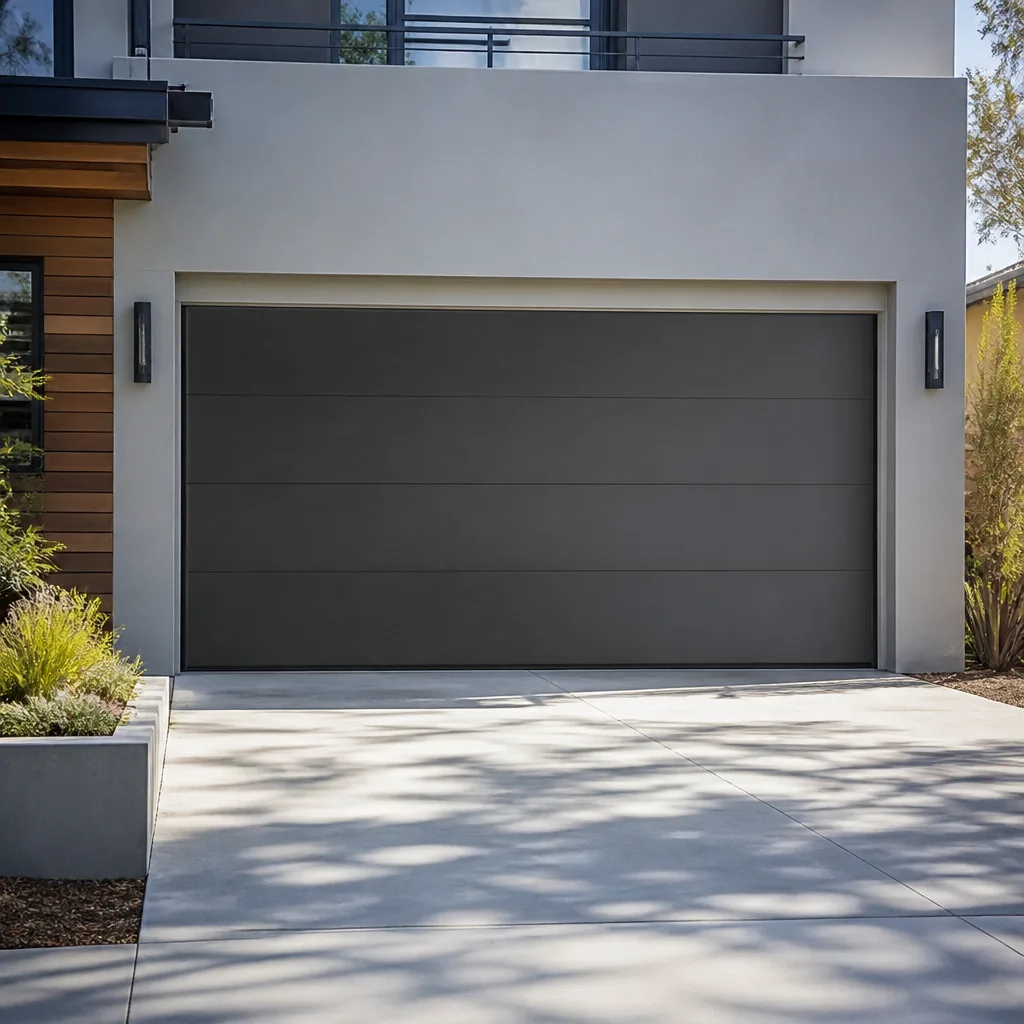 Modern flush
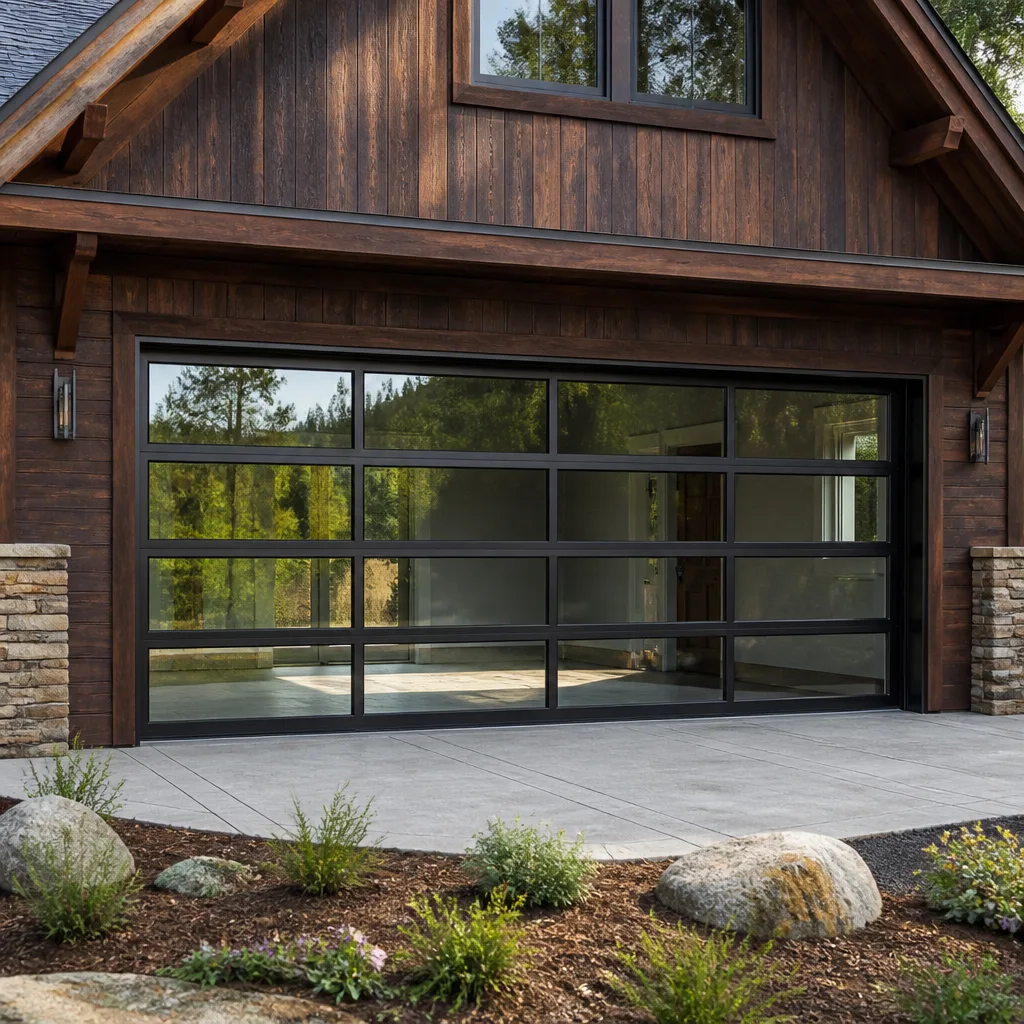 Full-view glass
 LiftMaster openers
 Chamberlain openers
Full 25-point door and opener safety check with every visit - springs, cables, rollers, tracks, and your LiftMaster or Chamberlain opener included
You get a price before we start. It does not change when the truck arrives.
Get your free estimateHow to Hire a Garage Door Contractor in San Jose: A Step-by-Step Guide
In California, any garage door repair over $500 in labor and materials legally requires a Contractors State License Board license, but most homeowners never ask to see one. That single oversight is how unlicensed operators stay busy in San Jose, and it’s why so many people end up with a repair that fails six weeks later and no way to hold anyone accountable. This guide walks you through the exact vetting process, from CSLB license lookup to what a legitimate written estimate must contain, so you can hire with confidence the first time. For more guides & resources, visit our blog. It’s written from our perspective as a San Jose garage door company that has seen every variation of contractor behavior since 2001.
Quick Answer
To hire a garage door contractor in San Jose, start by verifying their CSLB license on the California Contractors State License Board website, confirm they carry workers’ compensation and general liability insurance, and ask for a written estimate that itemizes parts with part numbers, labor hours, warranty terms, and a change-order policy. For a deeper look at local options, see our Complete Guide to Garage Door in San Jose. A legitimate contractor answers the phone, shows up inside the arrival window they gave you, and puts the price in writing before any work begins. Expect a spring replacement to run $150 to $280 parts and labor included, and a full opener swap to land between $350 and $650 depending on the motor and rail type.
Styles & brands we work with
Table of Contents
- Step 1: Check the CSLB License First
- Step 2: Confirm Insurance and Bond Status
- Step 3: Get a Written Estimate That Actually Means Something
- Step 4: Read Reviews Like a Skeptic, Not a Shopper
- Step 5: Ask the Right Questions Before You Book
- Step 6: Recognize Pressure Tactics and What to Say
- Step 7: Compare Quotes on Equal Footing
- Common Mistakes to Avoid
Step 1: Check the CSLB License First
The fastest way to filter out bad actors in San Jose is to visit the California Contractors State License Board website, enter the contractor’s name or license number, and read what comes back. You’re looking for a current, active license without suspensions, citations, or bond cancellations in the history. For garage door work specifically, you want to see the C-61/D-28 classification, which is the Door and Gate specialty classification. A general contractor with a B license can legally handle garage door work as part of a larger project, but a standalone specialist should hold C-61/D-28. If the person on the phone can’t or won’t give you a license number, that’s the end of the conversation.
Here’s the step-by-step CSLB lookup process:
- Go to cslb.ca.gov and click “Check a License” on the homepage.
- Enter the business name or license number. If you only have a first name and a phone number, you can’t complete the check, and that’s a red flag on its own.
- Confirm the license status reads “Active” and the expiration date is in the future.
- Scroll through the license history for any disciplinary actions, complaints that resulted in citations, or bond cancellations.
- Verify the classification includes C-61/D-28 or B, and that the business name matches what you were told on the phone.
In San Jose, we regularly see unlicensed operators working out of trucks with magnetic signs, and when the repair fails, the homeowner has no recourse. A license doesn’t guarantee quality, but it guarantees accountability. It means the state has verified the contractor passed a background check, carries a bond, and can be held responsible through a formal complaint process. That’s the floor, not the ceiling.
Step 2: Confirm Insurance and Bond Status
Every licensed contractor in California carries a license bond, but that bond is only $25,000, and it’s not insurance for your home. It protects you against specific violations of contractor law, not against property damage or an injured worker on your property. What you actually need to verify is general liability insurance and workers’ compensation coverage. Ask for a certificate of insurance directly from the contractor’s insurance agent, not just a photocopy from the contractor. A photocopy can be edited in ten minutes, but a certificate sent from the agent to your email is current and legitimate.
Workers’ compensation matters more than most homeowners realize. If a technician gets hurt on your property and the contractor doesn’t carry workers’ comp, that injury can become a claim against your homeowner’s insurance. In San Jose, where garage door springs are under hundreds of pounds of tension and injuries are a real occupational hazard, this isn’t a theoretical concern. Ask the question directly: “Can your insurance agent send me a certificate of coverage?” A trustworthy contractor says yes without hesitation. A deflection means you keep looking.
Bond status is also worth checking on the CSLB site. A canceled bond suspends the license automatically, which means the contractor can’t legally work until it’s reinstated. If you see a gap in bond history, ask about it. There are legitimate explanations, but you deserve to hear one.
Step 3: Get a Written Estimate That Actually Means Something
A verbal quote is not an estimate. A text message with a number is not an estimate. In San Jose, where a garage door repair can range from a $120 sensor alignment to a $1,800 panel replacement, you need a written document that spells out exactly what you’re paying for before any work begins. A legitimate written estimate includes itemized parts with part numbers, labor hours or a flat labor charge, warranty terms on both parts and labor, and a clear change-order policy that explains what happens if the technician finds additional damage once the work starts.
Here’s what a legitimate written estimate must contain:
- Itemized parts with part numbers. Not “spring” but “torsion spring, .225 wire, 26-inch length, part #T-225-26.” Part numbers let you verify the price and the product.
- Labor hours or a flat labor charge. You should know whether you’re paying $95 per hour or $180 flat for a spring replacement. If it’s hourly, the estimate should cap the hours.
- Warranty terms. The document should state what’s covered, for how long, and whether the warranty includes both parts and labor or just parts. A parts-only warranty means you could pay another service call fee if the part fails.
- A change-order policy. This is the part most estimates skip. It should say that if additional work is discovered, the contractor will stop, explain what changed, and get your written approval before continuing. No surprises.
- Payment terms. When is payment due, and what forms of payment are accepted. This should be explicit, not assumed.
At Bramwell Garage Doors San Jose, we put the price in writing before any work starts, on every job, without exception. That’s one of the four Kingswell promises: written price, real arrival window, clean job site, written guarantee. If a contractor won’t put a price in writing before touching your door, you should assume the number will change once the truck is in your driveway.
Step 4: Read Reviews Like a Skeptic, Not a Shopper
Google and Yelp reviews are useful, but only if you know how to read them critically. The pattern to watch for is detail. Genuine reviews mention specifics: the technician’s name, what was wrong, how long it took, what the final price was, how the interaction went. Templated reviews use vague language: “great service,” “highly recommend,” “professional and friendly.” Five vague five-star reviews in a row, all posted within a week, is a pattern that suggests review buying or a review exchange, not genuine customer satisfaction.
Here’s how to read reviews critically:
- Look for reviews that mention a specific problem and a specific resolution. “My torsion spring snapped on a Wednesday morning, they had a tech out by noon, and the total was $190 including the spring and labor” is a real review. “Great company, would use again” is not.
- Check the reviewer’s other reviews. If someone has reviewed 14 garage door companies across six states in the last month, they’re likely a paid reviewer.
- Look at the negative reviews for patterns. One bad review about a missed appointment is normal. Five bad reviews that all mention price changes at the door is a pattern you should take seriously.
- Ignore the star rating and read the substance. A 4.2 with detailed, specific reviews is worth more than a 4.9 with generic filler.
- Check for review responses. A company that responds to negative reviews with specific, honest acknowledgments of what went wrong is demonstrating accountability. A company that argues with every negative reviewer or ignores them entirely is telling you something about how they handle problems.
In San Jose, we’ve seen companies that generate dozens of five-star reviews in a month and then burn through a fee complaint backlog at the Better Business Bureau. Review volume matters less than review substance. Read the words, not the stars.
Step 5: Ask the Right Questions Before You Book
The phone call before you book is a diagnostic interview. You’re not just scheduling a repair. You’re testing whether this company answers the phone, communicates clearly, and respects your time. A trustworthy answer to the questions below sounds specific, honest, and unhurried. A deflection sounds vague, rushed, or defensive. Write down the answers so you can compare across multiple contractors.
Here are the questions to ask, with what a good answer sounds like:
- “Who is answering the phone right now?” A trustworthy answer: a live person at the company, not an answering service that promises a callback. At Bramwell, a live person answers the phone 24 hours a day, 7 days a week, including nights, weekends, and holidays. If you get a voicemail tree during business hours, that tells you how the company treats its customers before they’ve paid anything.
- “What brands do you service?” A trustworthy answer lists specific brands: LiftMaster, Chamberlain, Genie, Clopay, Amarr, Wayne Dalton, Craftsman, Raynor. A deflection says “all brands” without naming any, which usually means the technician is figuring it out on your dime.
- “What does your warranty cover, and for how long?” A trustworthy answer is specific: parts and labor for one year, written guarantee included with every repair. A deflection says “we stand behind our work” without naming a time period or saying it’s in writing. Our 365-Day Done Right Promise means if the repair fails within a year, we come back and fix it at no charge, and that commitment is in writing, not just spoken.
- “Will the price change once you see the door?” A trustworthy answer: the price is quoted and agreed before any work starts, and if we find additional damage, we stop and get your approval before continuing. A deflection dodges the question, which is your cue to hang up.
- “Are your technicians background-checked?” A trustworthy answer: yes, and they arrive in uniform. You should know exactly who is pulling into your driveway. A deflection changes the subject to speed or price.
Step 6: Recognize Pressure Tactics and What to Say
Dishonest garage door contractors in San Jose rely on three pressure tactics to push homeowners into fast decisions. Once you know the scripts, they lose their power. Here’s each tactic, how it works, and what to say in response.
Tactic 1: Same-day urgency. The contractor claims you need to make a decision immediately because the price is only good for today, or they have a slot open right now that won’t be available tomorrow. What to say: “I appreciate the slot, but I need a written estimate first.” A legitimate contractor will give you the written estimate and let you decide. If the price expires, the deal wasn’t real to begin with.
Tactic 2: Parts-already-removed leverage. The technician removes the broken spring, opener, or panel, then presents you with a price substantially higher than the verbal quote. Now your door is disassembled and you feel trapped. What to say: “Put it back the way you found it, and I’ll get a second opinion.” A legitimate contractor never removes parts before you’ve approved the price in writing. At Bramwell, the price is agreed before any work starts, always.
Tactic 3: Verbal-only quotes. The contractor gives you a number over the phone or at the door but won’t put it in writing. When the invoice comes, the number is different, and you have no documentation to dispute it. What to say: “I’m not approving any work until I see a written estimate.” If they walk, you’ve saved yourself a headache. A written price before any work starts is the single strongest indicator of an honest contractor.
We’ve seen every variation of these scripts in San Jose, and they all share the same structure: create urgency, create dependence, avoid documentation. The antidote to all three is the same: insist on a written price and a written guarantee before the work begins.
Step 7: Compare Quotes on Equal Footing
Once you’ve collected two or three written estimates, you need to compare them line by line, not just by bottom-line total. Two quotes for a spring replacement can both look like “$250,” but one includes a one-year parts and labor warranty, a real arrival window, and a written guarantee, while the other is a spring with no warranty and no documentation. Here’s how to line up the comparison.
For a torsion spring replacement, the relevant line items are the spring itself, the labor, and the warranty. Most torsion spring replacements run $150 to $280, parts and labor included, in the current San Jose market. If one quote comes in at $400 for the same spring and the same warranty, you’re paying a markup for the convenience of a fast truck. If one quote comes in at $99, you’re likely getting a spring with no warranty, a technician who isn’t background-checked, or a price that will change at the door.
For an opener replacement, compare the motor type, the rail type, and the warranty separately. A chain-drive LiftMaster or Chamberlain with a seven-foot rail should land around $350 to $500 installed. A belt-drive with a battery backup should run $500 to $650. If a quote doesn’t specify the motor type or the rail length, that’s a warning sign. You can’t compare what isn’t written down.
The Kingswell Way runs every job through the same five values: say the price before the work, show up in the window, leave the place cleaner than we found it, put the guarantee in writing, come back if it fails. When you’re comparing two quotes, compare them against those five standards, not just the number at the bottom of the page.
Common Mistakes to Avoid
- Hiring without checking the CSLB license. Any repair over $500 in labor and materials legally requires a license in California. If the contractor is unlicensed and the repair fails, you have no formal recourse. The lookup takes three minutes.
- Accepting a verbal quote as binding. Without a written estimate, the number you heard on the phone is worth the air it traveled through. Insist on a written price before any work starts.
- Ignoring the warranty details. A parts-only warranty means you could pay a service call fee on a failed part within months. Ask what’s covered, for how long, and whether labor is included.
- Paying in full before the work is complete. Some contractors in San Jose ask for full payment upfront and then never finish the job. A deposit is reasonable; full payment before completion is not.
- Assuming a low price means a good deal. A spring replacement priced at $99 is not a deal. It’s a spring with no warranty, no documentation, and likely no licensed contractor behind it.
- Skipping the review details. Star ratings alone don’t tell you anything. Read the specific language of the reviews and look for patterns in the negative feedback. Specificity is the marker of authenticity.
- Letting urgency override judgment. A broken garage door is inconvenient, but a rushed decision that locks you into a bad contractor is worse. Take the fifteen minutes to vet before you book.
See the difference
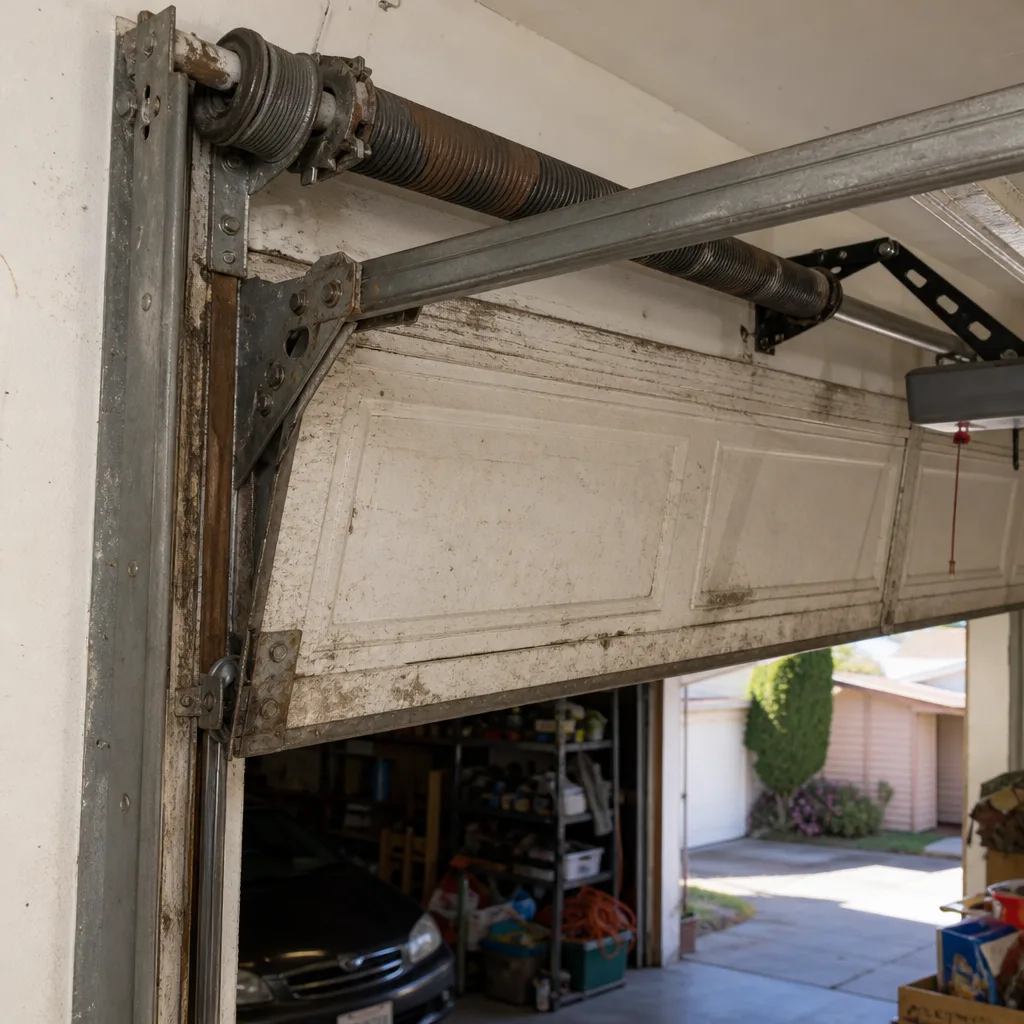 Before
 After
After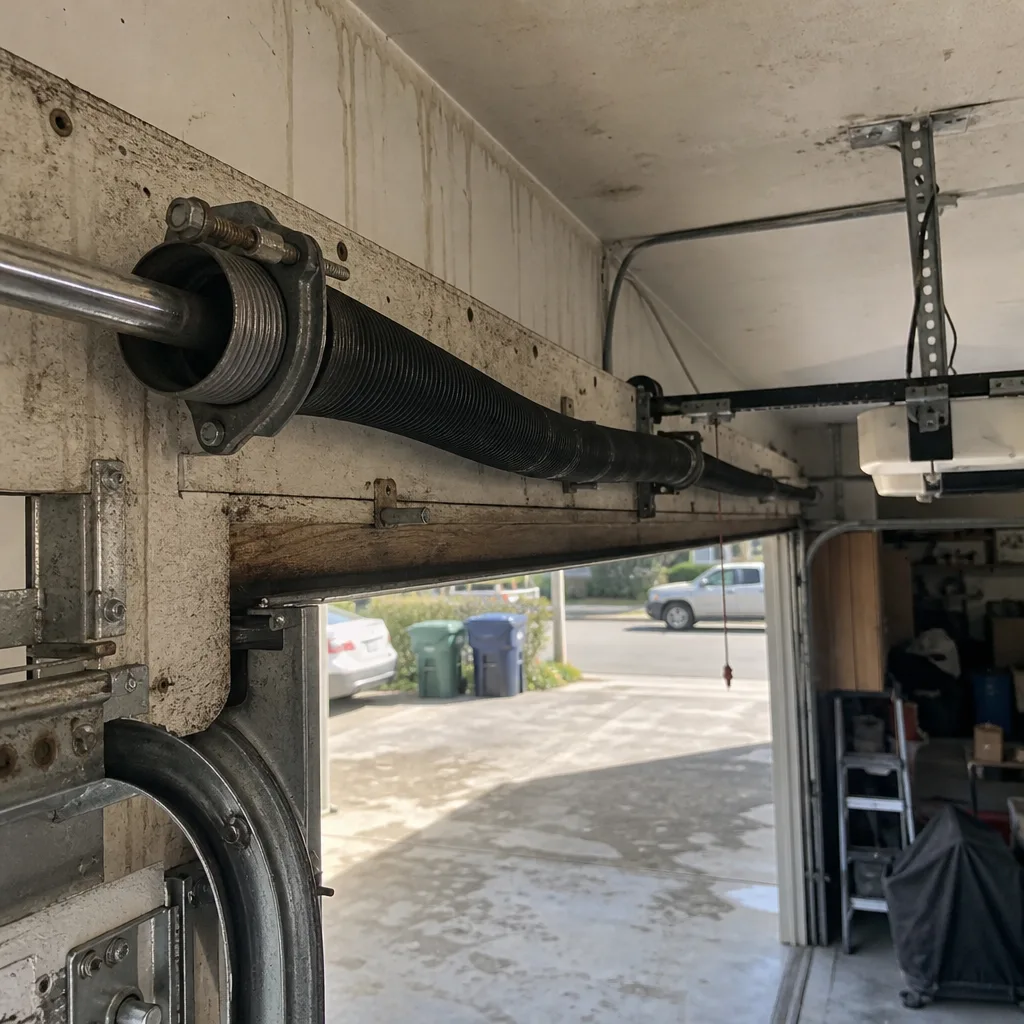 Before
 After
After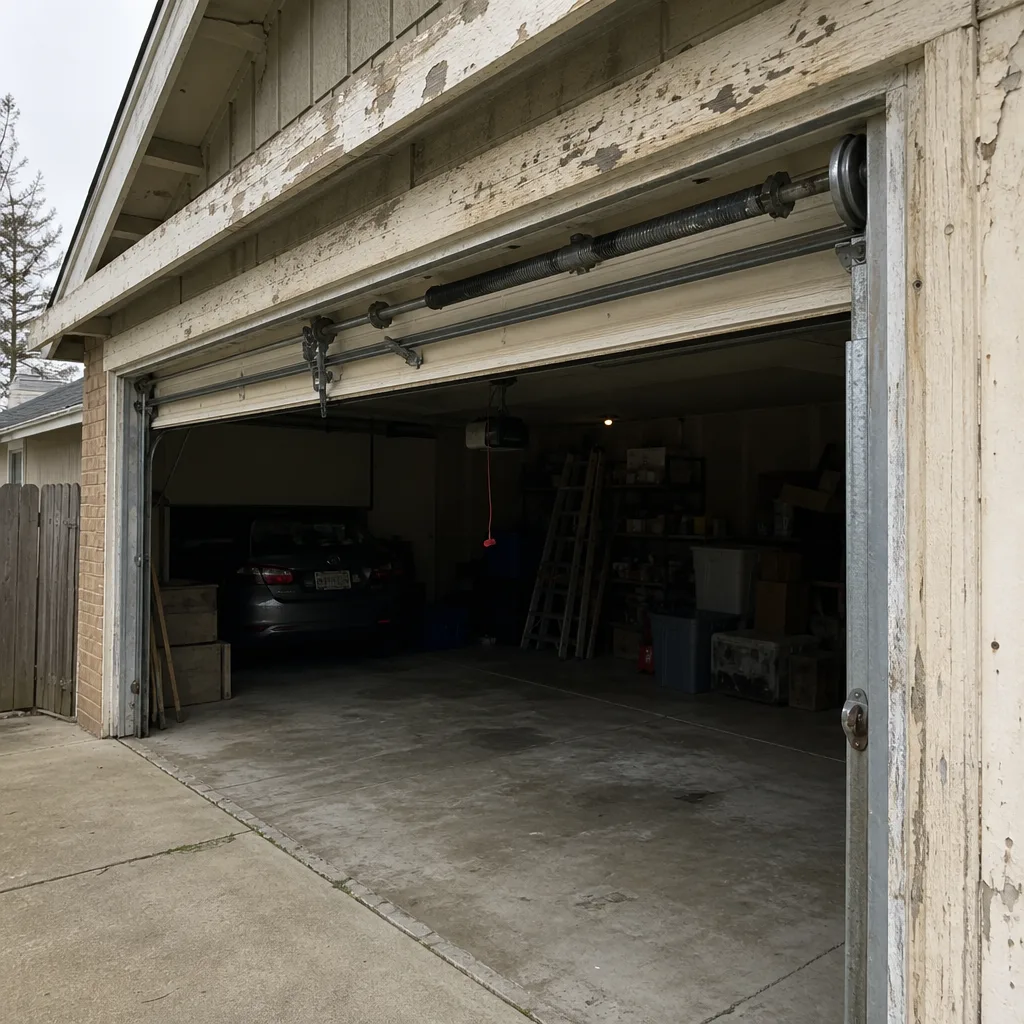 Before
 After
AfterWhen to Call a Professional
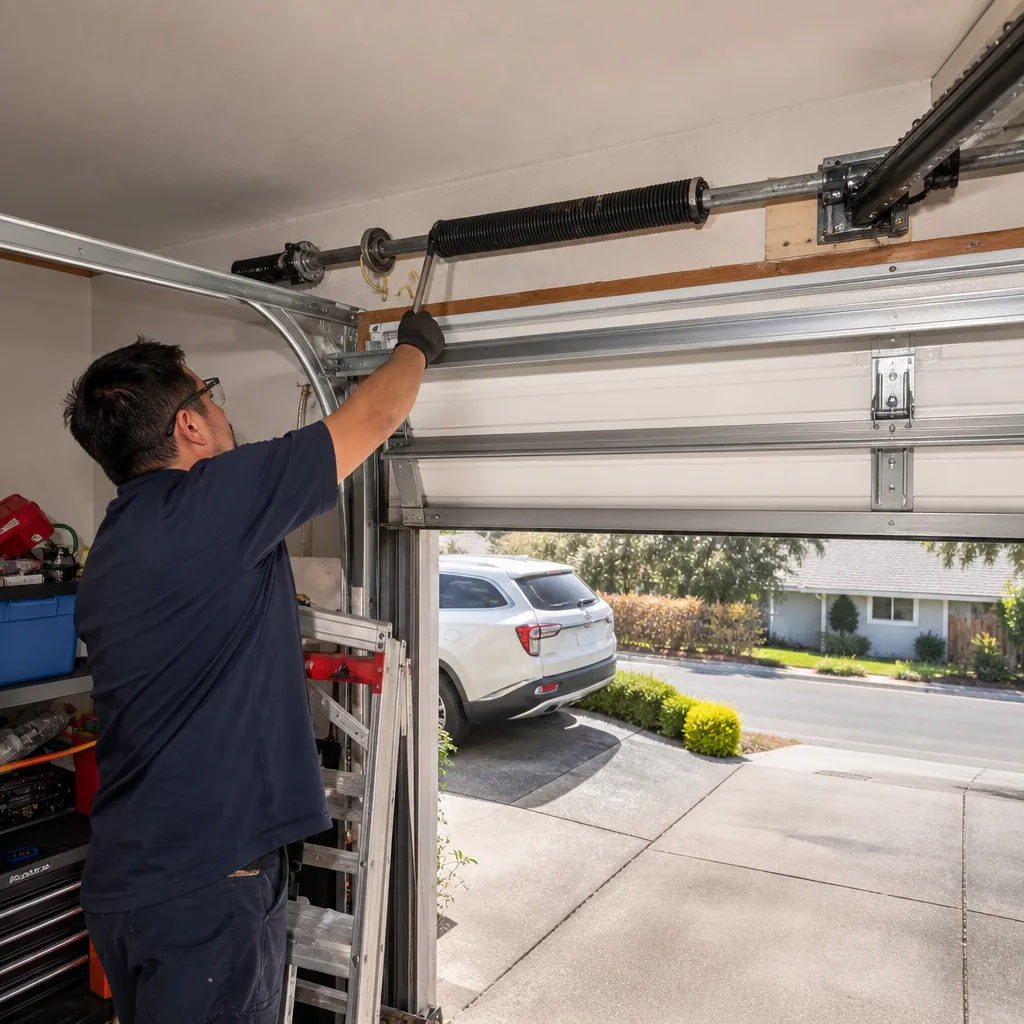
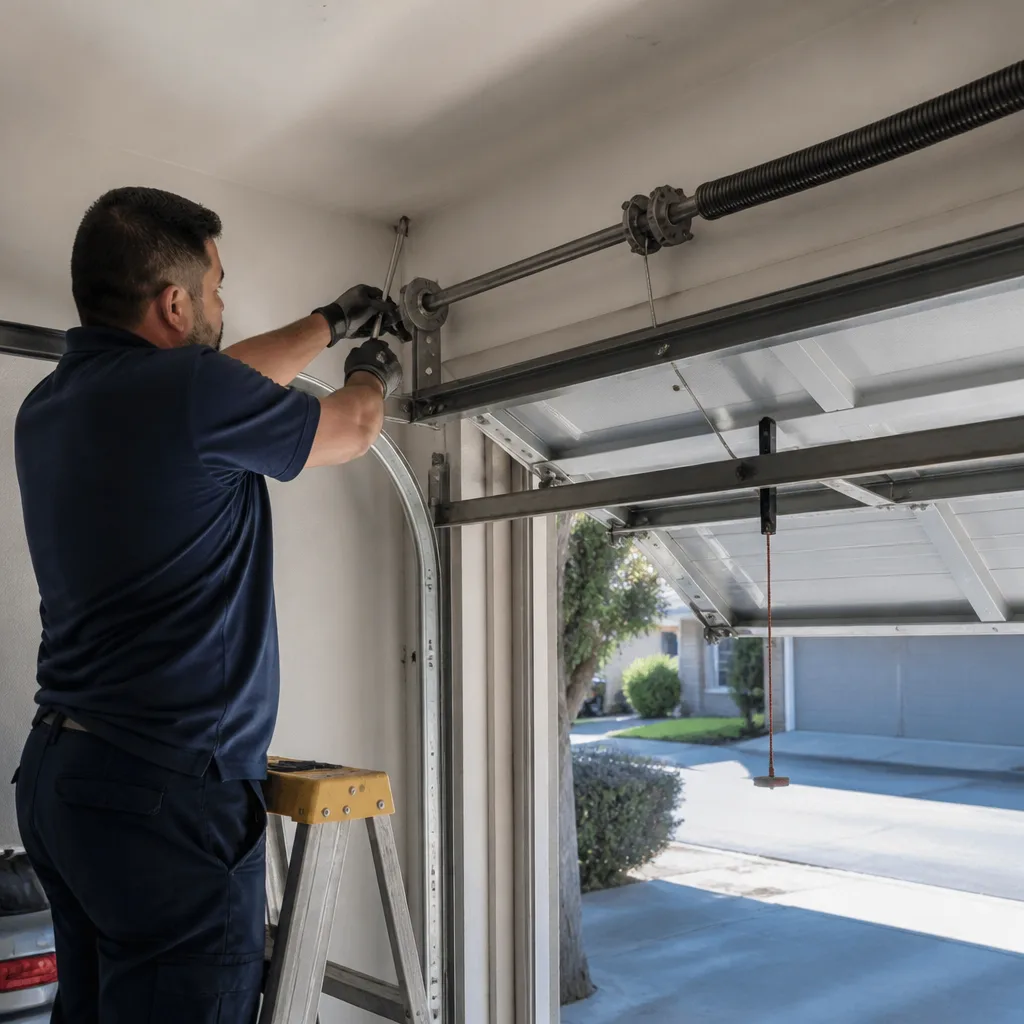
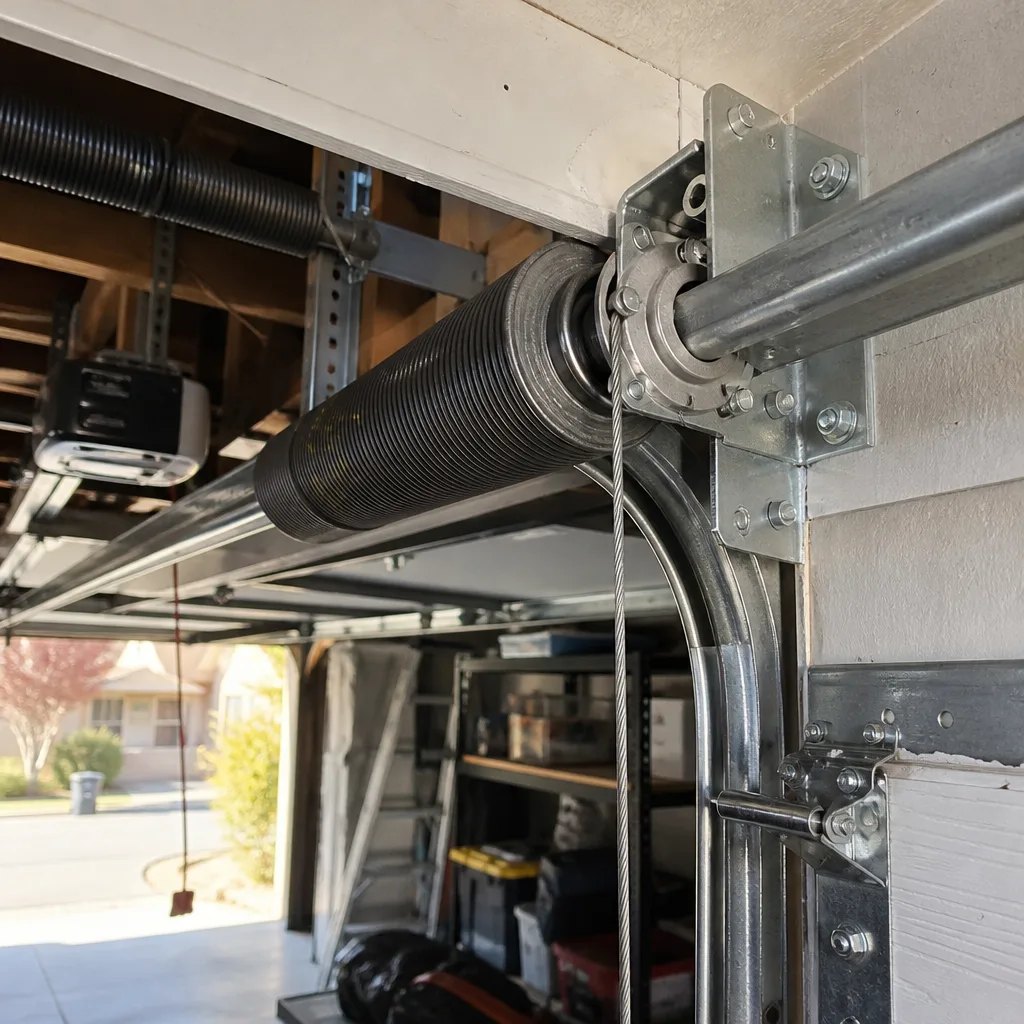
Some garage door issues are safe to address with basic maintenance: tightening loose hardware, realigning photo-eye sensors, lubricating hinges and rollers. Spring replacement is not one of those issues. If you’re unsure whether to DIY or call a pro, read our DIY vs Professional Garage Door: The San Jose Homeowner’s Decision Guide. A torsion spring, the heavy coil mounted above the door that handles most of the lifting weight, is under hundreds of pounds of tension. When it breaks, the release of that tension can cause serious injury or death. Cable replacement carries the same risk, and opener repair involves electrical components that should be handled by someone who knows the system. If your door jumps off track, makes a loud bang in the middle of the night, or the spring is visibly broken, that’s a call for a trained technician, not a ladder and a wrench. Bramwell Garage Doors San Jose offers free estimates throughout San Jose, call (669) 444-4253 and a live person will answer.
Frequently Asked Questions
Most torsion spring replacements in San Jose run $150 to $280, parts and labor included. The exact price depends on the spring’s wire gauge, length, and whether it’s a standard or high-cycle spring. Springs carry a parts and labor warranty; at Bramwell, every spring replacement includes the 365-Day Done Right Promise in writing. Call (669) 444-4253 for an exact quote; estimates are free.
In many cases, yes, our technicians in San Jose carry the most common springs, cables, rollers, and opener parts on the truck, which means the repair can often be completed in a single visit. Some specialty parts may need to be ordered, but we’ll tell you that before we start, and the price for parts and labor is agreed in writing before any work begins. Call (669) 444-4253 and a live person will answer, 24/7.
No. The price we quote is the price you pay, and it’s written down before any work starts. If we discover additional damage during the repair, we stop, explain what changed and why, and get your written approval before continuing. That’s the Kingswell Guarantee, and it applies on every job without exception.
Our San Jose technicians carry a full inventory of the most common torsion springs, extension springs, cables, rollers, hinges, and opener components on every truck. That means most repairs can be completed in a single visit, with the written estimate presented before anything is disassembled. If a part is not on the truck, we’ll order it and schedule the return visit at no additional dispatch fee.
Our technicians are authorized to service LiftMaster, Chamberlain, Genie, Clopay, Amarr, Wayne Dalton, Craftsman, and Raynor. If you have an opener or door from a brand not on that list, call (669) 444-4253 and ask; in most cases we can source the parts and complete the repair. A live person answers the phone 24 hours a day.
Go to cslb.ca.gov, click “Check a License,” and enter the business name or license number. You’re looking for an active license with the C-61/D-28 classification for garage door work, current workers’ compensation coverage, and no disciplinary actions or bond cancellations in the history. If the contractor won’t provide a license number, do not hire them.
The Bottom Line
Hiring a garage door contractor in San Jose comes down to verification and documentation, and most of the risk disappears when you insist on both. Check the CSLB license, confirm insurance and bond status, and demand a written estimate with itemized parts, warranty terms, and a change-order policy. Read reviews for specific details, not star ratings, and never approve work based on a verbal quote or same-day urgency. If you want a garage door company that has operated under the Kingswell standard since 2001, Bramwell Garage Doors San Jose home is the place to start. You can also read about our Garage Door Repair in San Jose, Garage Door Installation in San Jose, and Garage Door Spring Repair in San Jose. Call (669) 444-4253 for a free estimate, written price, and a live person on the other end of the line.
Written by Marcus Ellery, Owner at Bramwell Garage Doors San Jose, serving San Jose since 2001.