
Last updated October 16, 2026
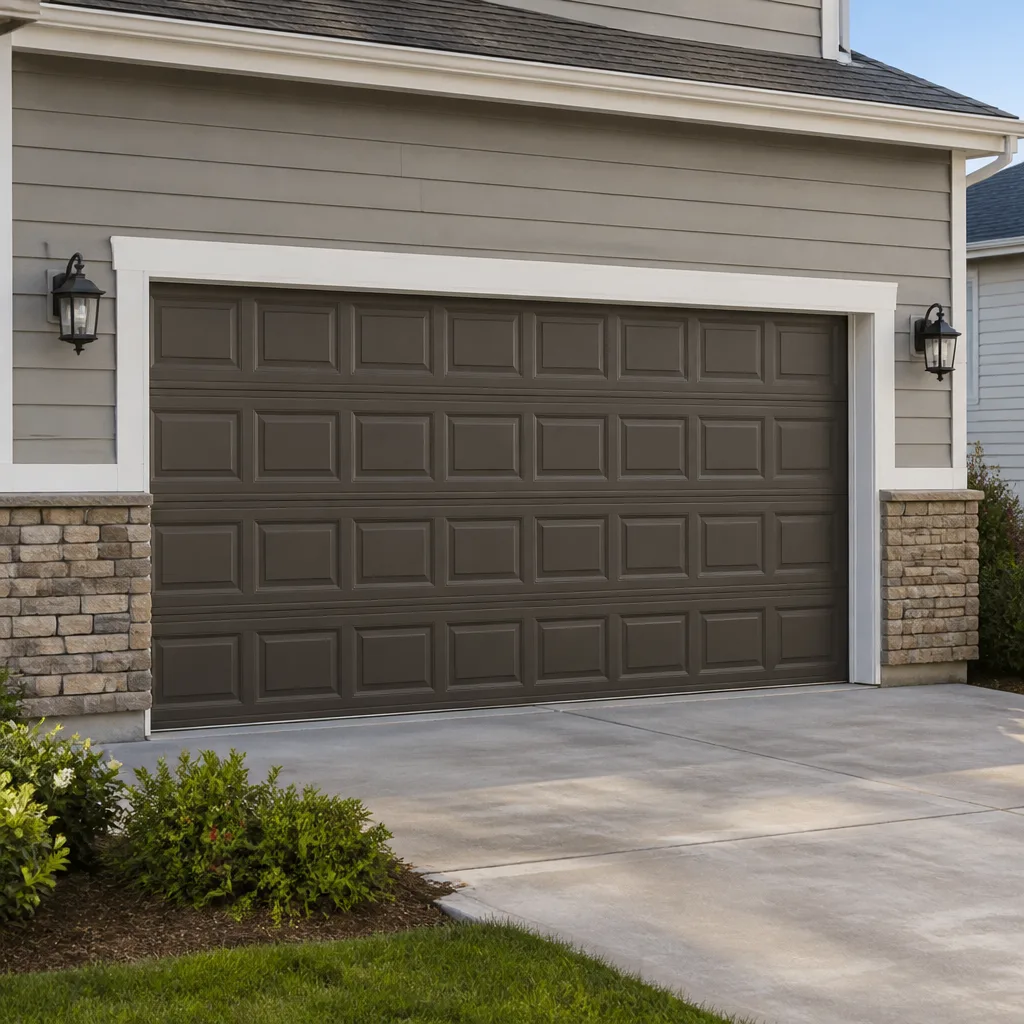 Raised-panel steel
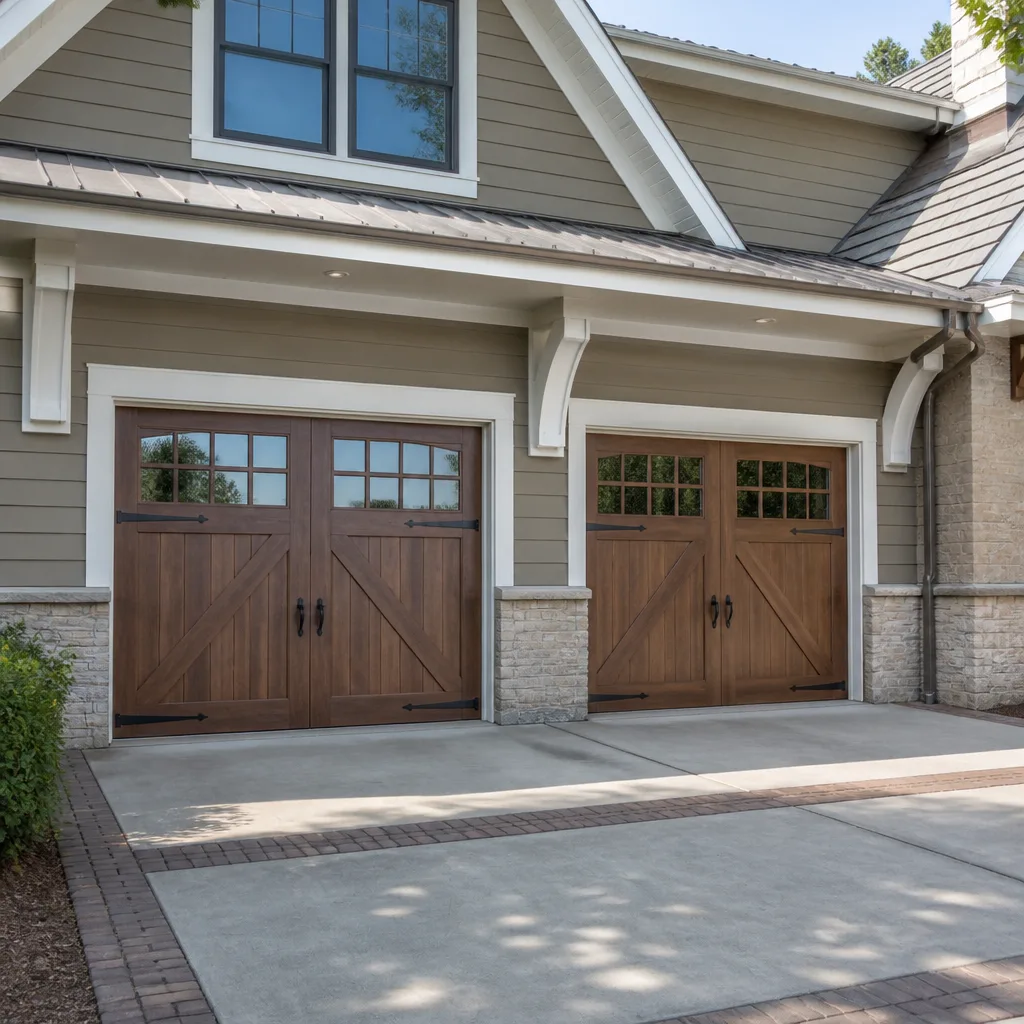 Carriage house
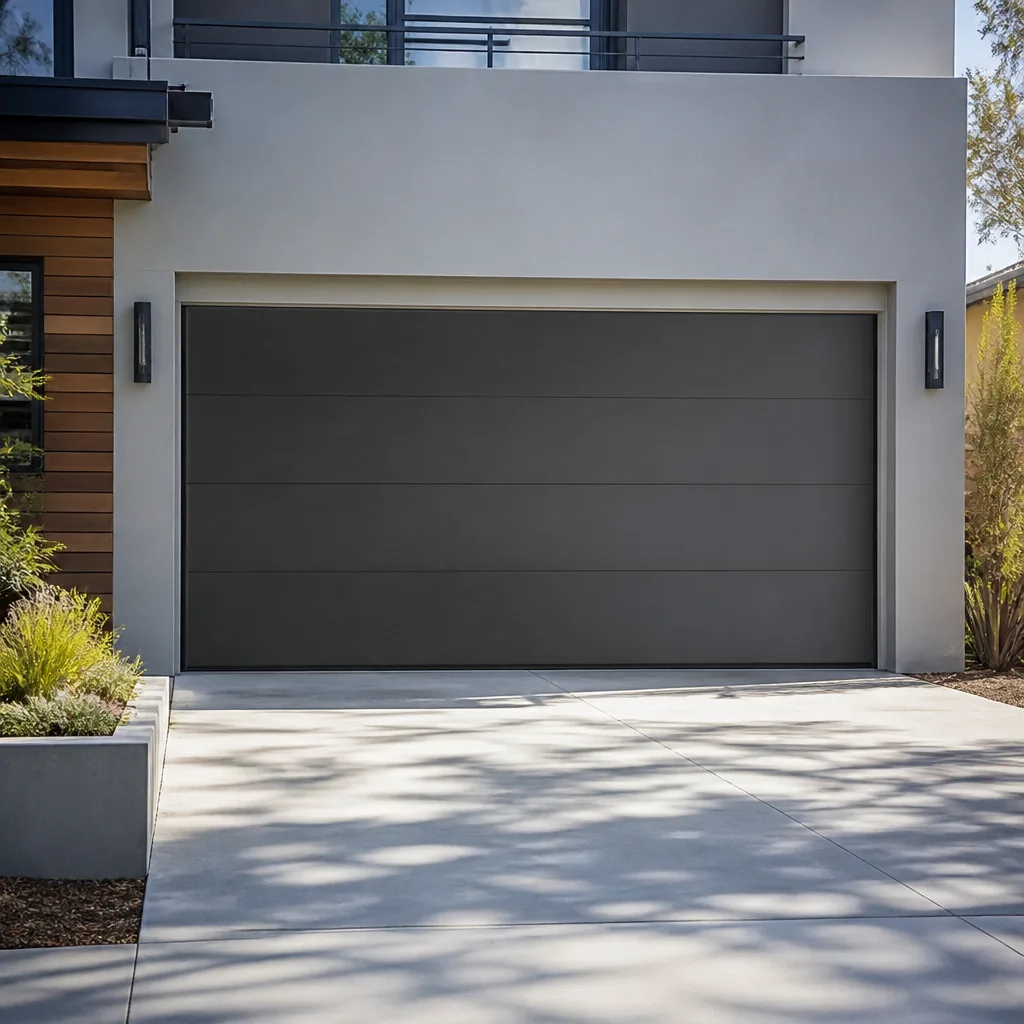 Modern flush
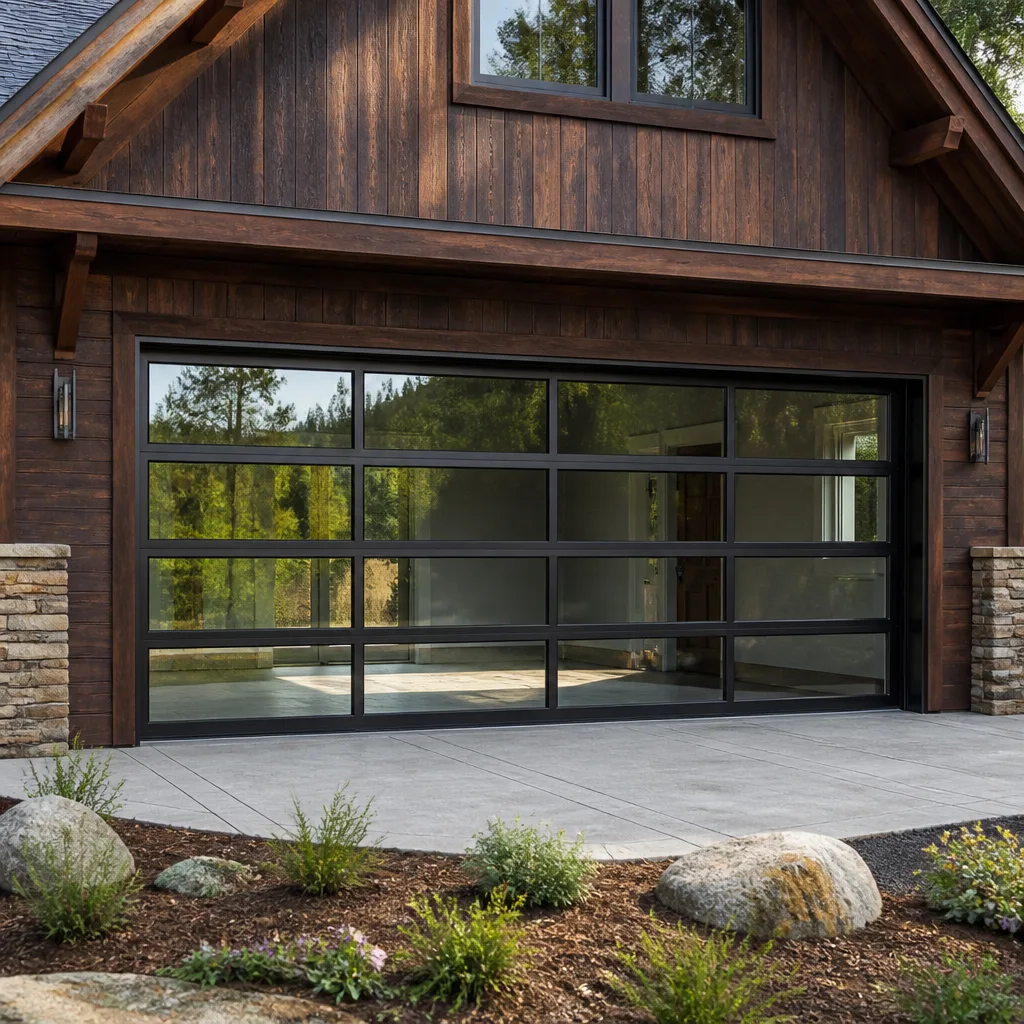 Full-view glass
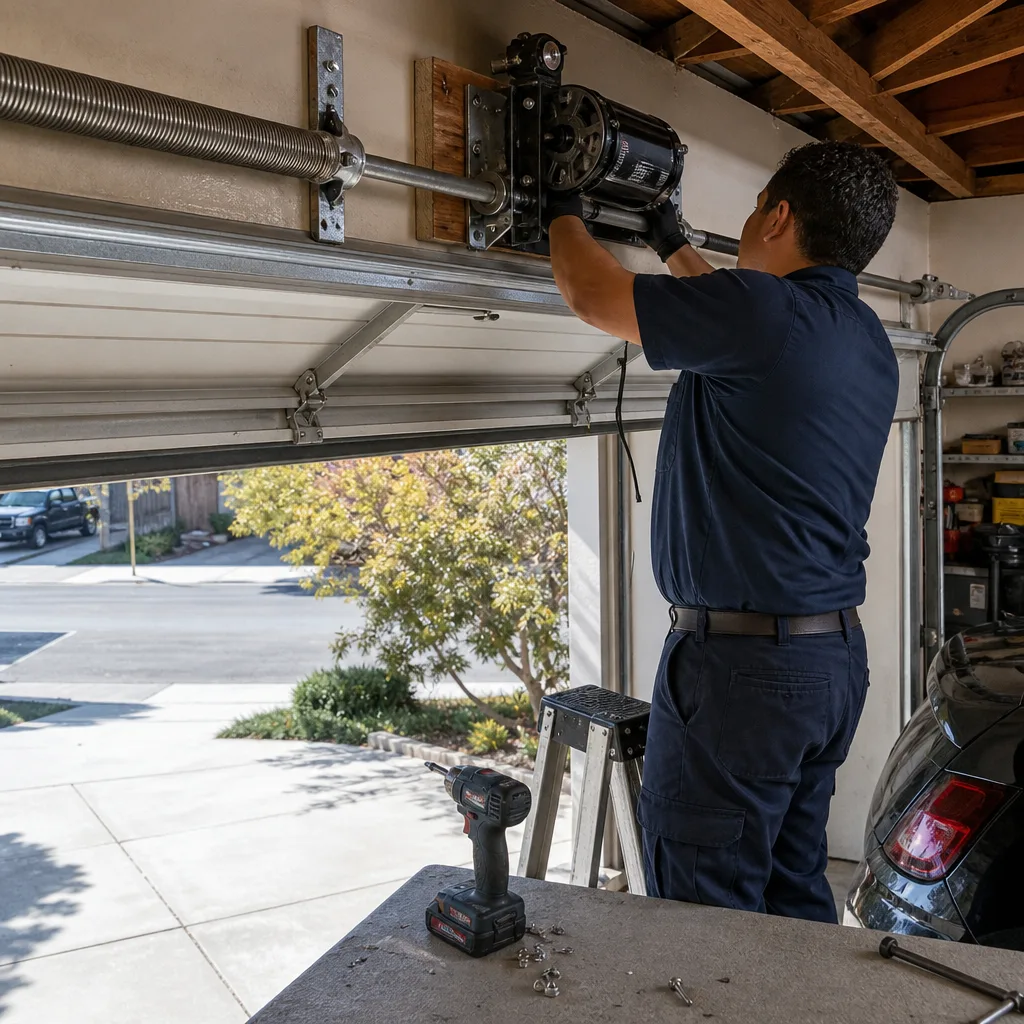
 LiftMaster openers
 Chamberlain openers
Full 25-point door and opener safety check with every visit - springs, cables, rollers, tracks, and your LiftMaster or Chamberlain opener included
You get a price before we start. It does not change when the truck arrives.
Get your free estimateGarage Door Warning Signs: A San Jose Homeowner’s Reference Guide
A garage door that hesitates for two seconds before moving isn’t “warming up” – it’s a limit switch or motor capacitor showing early failure, and that two-second pause typically becomes a no-movement situation within 30 to 90 days. We wrote this guide because most San Jose homeowners call us after the door has already failed, when a warning sign had been present for weeks or months. For more guides & resources, see our blog. You’ll learn to read the specific sounds, behaviors, and visual cues your door gives off, understand which ones demand immediate attention and which can wait, and know what a repair should cost before you ever pick up the phone.
Quick Answer
The most serious garage door warning signs in San Jose are a visible gap in a torsion spring, fraying lift cables, a door that reverses on its own, grinding or popping sounds during operation, and a door that won’t stay at half-open position. Any of these means the door is operating unsafely and should be inspected by a professional within days – not months. Most repairs that catch these early run $150 to $280, while waiting until failure typically pushes the bill past $400 and can put a 150-pound door on the ground.
Styles & brands we work with
Table of Contents
- Sounds: What Your Door Is Trying to Tell You
- Visual Warnings: What to Look For Without Touching Anything
- Behavioral Signs: When the Door Acts Differently
- Cosmetic vs. Structural: What You Can Ignore and What You Can’t
- The “It Still Works” Rationalization: Why It’s Dangerous
- San Jose’s Garage Door Age Factor: Pre-2005 vs. Modern Installations
- San Jose Climate and Your Door: What the Valley Air Does
- What to Do When You Spot a Warning Sign
Sounds: What Your Door Is Trying to Tell You
Every garage door makes some noise. A well-maintained door makes a steady, low hum with a soft rumble as the rollers travel the track. What it should not do is grind, pop, squeal, or rattle. Each of those sounds maps to a specific component, and the faster you identify it, the cheaper the fix. Here is the map we use on service calls across San Jose, from Almaden Valley to Berryessa.
| Sound | Likely Source | Urgency | Typical Repair Cost |
|---|---|---|---|
| Grinding during travel | Worn rollers, dry bearings, or misaligned track | Fix this month | $85 – $160 |
| Squealing or high-pitched whine | Dry torsion spring coils, worn bearing plates | Monitor, then fix | $60 – $120 |
| Loud pop or bang (single event) | Torsion spring snapped | Fix now – door is unsafe | $180 – $340 |
| Rattling while moving | Loose hardware, worn hinges, loose roller stems | Fix this month | $70 – $140 |
| Deep rumble, metal-on-metal | Opener gear failure or trolley wear | Fix now | $120 – $220 |
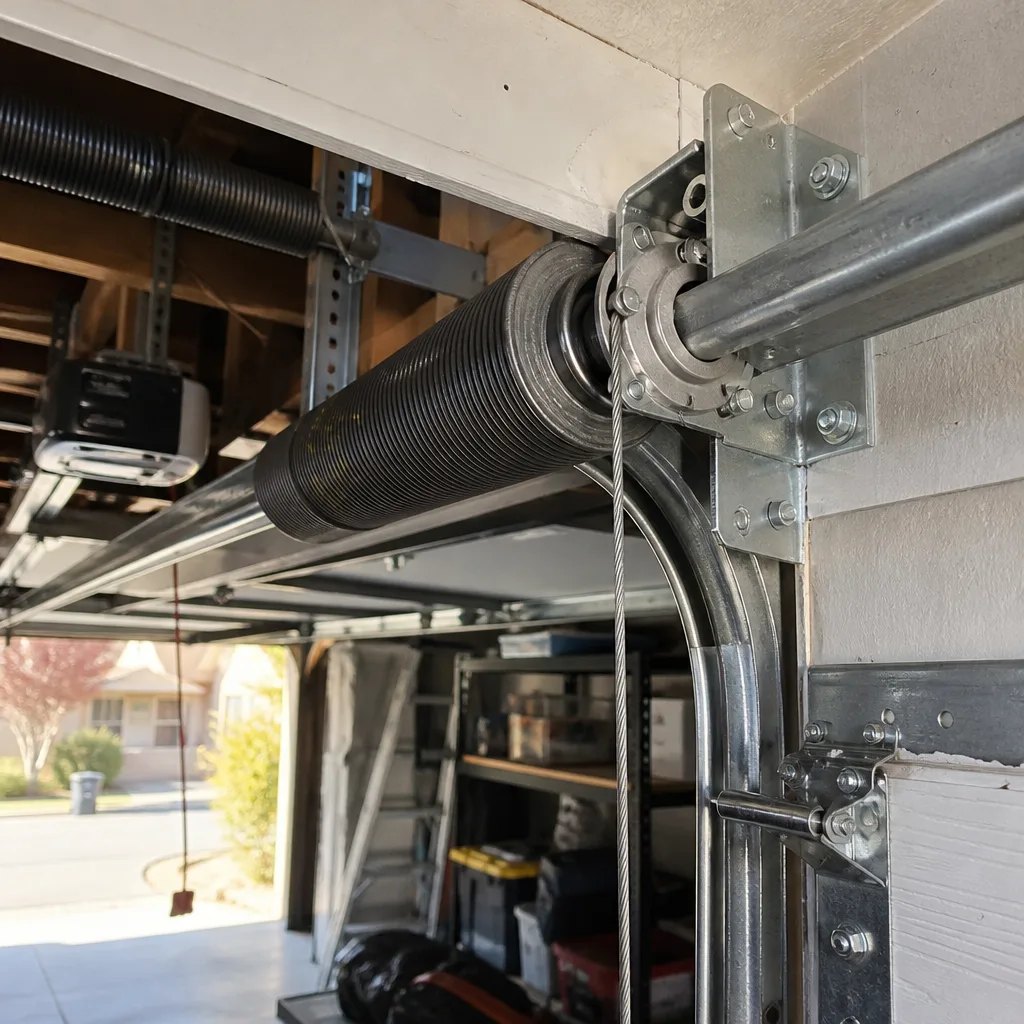
The single pop is the one that matters most. A torsion spring – the heavy coil mounted above the door that handles most of the lifting weight – is under hundreds of pounds of tension every second of every day. In San Jose’s climate, the temperature swings between cool coastal mornings and hot inland afternoons cause microscopic expansion and contraction in that spring steel. Most torsion springs last 10,000 to 15,000 cycles, which for a door opened four times a day works out to roughly 7 to 10 years. When the spring snaps, the door’s entire weight shifts to the cables and the opener, neither of which is designed to hold it. If you hear that pop, stop using the door and call a professional. The repair is a $180 to $340 job that takes under two hours. The alternative is a door that comes down on whatever is under it.
Garage Door Spring Repair in San Jose is our most-booked service for exactly this reason – most people wait for the pop instead of listening for the squeal that preceded it.
Visual Warnings: What to Look For Without Touching Anything
You do not need to climb a ladder or remove any covers to inspect your door. In fact, please don’t – the areas worth inspecting are precisely the ones that carry the most tension, and a slip can cause serious injury. Here is what you can see from the ground, standing safely inside your garage.
The torsion spring gap
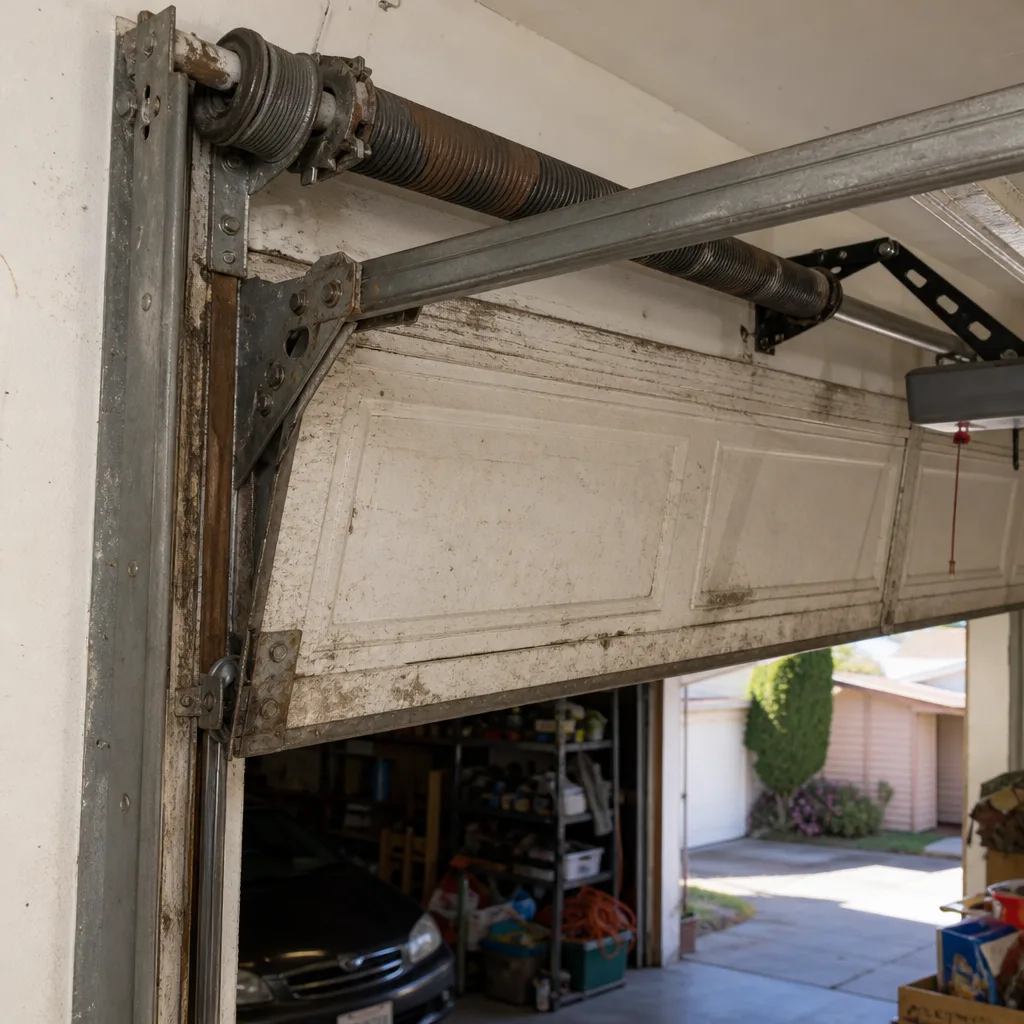
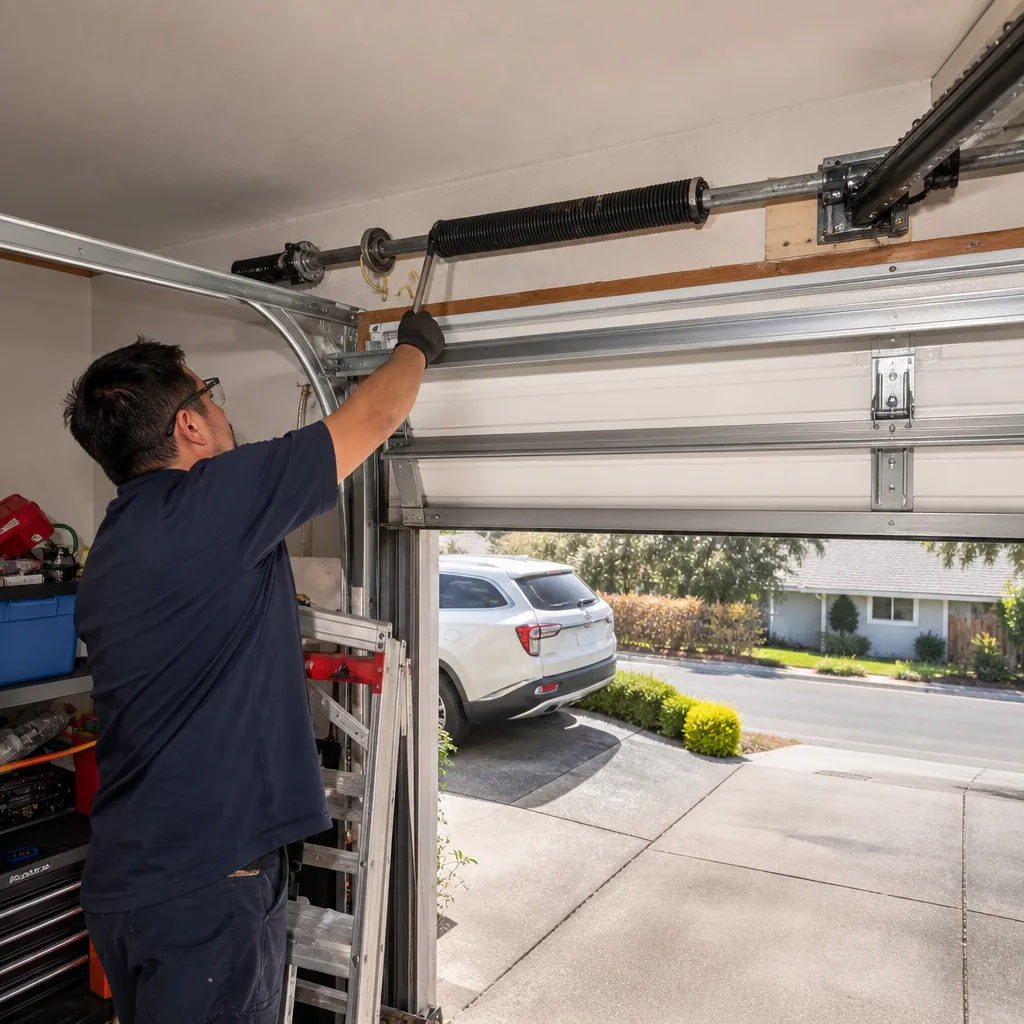
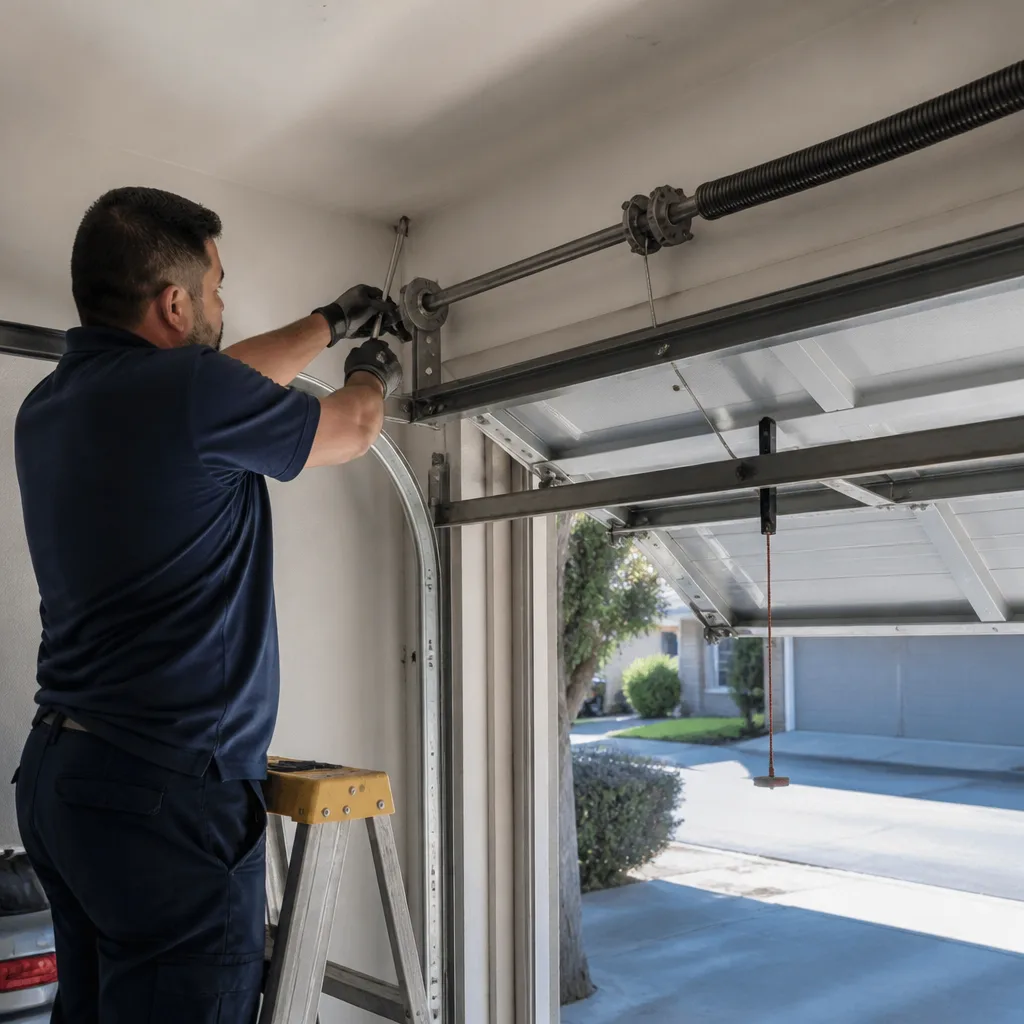
Look above the door at the spring mounted on the header. On a healthy door, the spring is one continuous coil running most of the width of the door. If you see a two- or three-inch gap in the middle of the coil, the spring has snapped. This is the most common failure we see in San Jose, particularly in the late fall when the first cold snap hits after a warm summer. A door with a snapped spring will not open by hand and will not open with the opener. Do not try to force it.
Fraying lift cables
Look at the cables running along each side of the door, connecting the bottom corners to the drums near the top. On a healthy door, these cables look like tightly-wound steel rope – smooth, uniform, and taut. If you see loose strands poking out, a kink, or rust discoloration, the cable is failing. Lift cables carry the door’s full weight during operation. When one fails, the door drops on that side and can come entirely off its tracks. Cable replacement runs $120 to $200 in San Jose and takes about an hour. A door that has come off its tracks is a $250 to $400 repair.
Bent or misaligned track
The vertical and horizontal tracks that guide the rollers should form a smooth, continuous curve. If you see a visible bend, a gap where the track sections should meet flush, or a widening of the track channel, the door is working against itself. In some San Jose neighborhoods with older homes – Willow Glen, Rose Garden, Naglee Park – we see tracks that were installed 20 or 30 years ago and have slowly drifted out of alignment with the house settling. Your rollers should glide through the track without visible wobble. If the door shudders as it passes a specific point in the track, that point is misaligned.
Worn or cracked rollers
Rollers are the small wheels at the sides of each panel. They wear in predictable ways: nylon rollers crack and chip; steel rollers flatten on one side and grind. If your rollers are visibly cracked, heavily worn, or if the door sounds like it’s grinding against its track, replacing them is a $85 to $160 job that makes an immediate difference in both noise and smooth operation.
Behavioral Signs: When the Door Acts Differently
Sometimes the door doesn’t make a new sound or show a visible flaw. It just behaves differently. These behavioral changes are frequently dismissed because “the door still goes up and down.” Here is what each one actually indicates.
The two-second hesitation
You press the button, nothing happens for a beat or two, then the door moves. That pause is not the door “warming up.” It’s the opener’s motor capacitor taking longer than it should to deliver the initial surge of power. The capacitor is a small cylinder inside the opener that stores and releases electricity. When it degrades, that release gets slower. The end state is an opener that hums but doesn’t move anything. Capacitor replacement is a $100 to $160 repair. Replacing a burned-out opener is $300 to $600 installed. The pause is your cheapest warning.
Door reverses before touching the floor
Your opener has a force-sensing circuit that tells it to reverse if it meets resistance. That circuit exists so the door doesn’t crush a child, a pet, or a bicycle. When the door reverses while the floor is clear, the limit switch – the device that tells the opener where “closed” is – may have drifted, or the door’s balance may be off so the opener is working harder than it should. A drifting limit is a $65 to $120 adjustment. An unbalanced door usually means a spring is wearing out and will need replacement within months, at $180 to $340.
Door won’t stay at half-open position
Manually open the door halfway and let go. A properly balanced door stays put. If it creeps down, the springs are losing tension. If it creeps up, the springs are carrying too much. Both conditions mean the opener is either working harder than designed or fighting the door, and both shorten opener life. This is a 10-second test anyone can do safely. If your door fails it, the fix is spring adjustment or replacement – not something that improves on its own.
Blinking opener light
Modern openers made by LiftMaster and Chamberlain use the light on the motor unit to blink in specific patterns when something is wrong. Four blinks usually points to the safety sensor. Two blinks typically indicates the door won’t close. These codes are listed on a sticker on the side of the motor unit, so you can read them without a manual. If the safety sensors at the base of the door track are misaligned or have a wire chewed through – not uncommon in San Jose, where roof rats are a known issue in older neighborhoods – the door will refuse to close. That’s the safety system working correctly. A quick recalibration is a $45 to $85 service call.
Cosmetic vs. Structural: What You Can Ignore and What You Can’t
Not every flaw on a garage door is a warning sign. Part of being a practical homeowner is knowing the difference between something that looks bad and something that is about to fail. In our experience across San Jose, homeowners tend to overreact to cosmetics and underreact to structure. Here is the line.
Safe to monitor
- Paint peeling or fading: The sun on south- and west-facing San Jose garages is brutal. Paint failure is a cosmetic issue and does not affect function. Repainting is a weekend project, not a repair call.
- Minor dents in a panel: A basketball or a slow car bump leaves a dent that looks worse than it is. If the panel is not cracked through, the door’s structural integrity is intact. It’s a cosmetic decision whether to repair or replace the panel.
- Rust on hardware, not cables: Surface rust on hinge plates or bolts is common in San Jose’s occasionally damp winters. It does not require immediate action. Rust on the cables themselves is a different story – replace those.
- Dirty or cloudy sensors: If your door occasionally refuses to close and the sensor lenses are dusty, clean them with a dry cloth. This is maintenance, not a failure.
Requires professional attention
- Any gap in the spring: Covered above. Never cosmetic.
- Frayed, kinked, or rusted cables: Covered above. Never cosmetic.
- Cracked panel joints: A sheet-metal crack at a hinge point or between panels is structural. The door is losing its rigidity and will eventually bind or fold. The fix is panel replacement, typically $350 to $700 depending on the panel and the door model.
- Track pulling away from the wall: If the brackets holding the track to the wall or ceiling are loose enough to see light behind them, the track is moving under load. This compounds quickly. A $100 bracket repair beats a $400 re-track.
- Any sound that got louder over the last month: Progressive noise means progressive wear. It does not heal.
The “It Still Works” Rationalization: Why It’s Dangerous
We hear it on nearly every emergency call: “The door was still working, so I figured it could wait.” This is the single most dangerous thought a homeowner can have about a garage door. Here is why that reasoning fails.
A garage door with a compromised spring is not a door that is “mostly fine.” It is a door whose full weight – between 120 and 200 pounds for a typical two-car door in San Jose – is being carried by components not designed for the job. The opener’s gear and sprocket are plastic or light metal. The lift cables are steel rope. The spring is a coiled steel bar under tension. When the spring breaks, two things happen instantly: the door’s weight transfers entirely to the cables and opener, and the spring itself releases its stored energy. If a person is standing near the spring when it snaps, that release can be violent. This is not a hypothetical – it is the most common cause of serious garage-door-related injury we know of.
Similarly, a fraying cable is a cable that has lost much of its rated strength. Most cables are rated for many times the door’s static weight, but that rating assumes intact strands. Once a cable is visibly frayed, it is shedding load capacity every cycle. The failure mode is not gradual – it’s sudden, and it’s usually on one side, which whips the door crooked in its tracks and off the bottom-roller line. The repair is no longer a cable swap. It’s a re-track, a possible panel replacement, and a door that sits unusable for a day or more.
The “it still works” door is working on borrowed time. Every cycle is a coin flip. We would rather inspect it while it’s still a $150 repair than wrestle it off the ground when it becomes a $500 one. Our Garage Door Repair in San Jose page covers exactly what an inspection call looks like.
San Jose’s Garage Door Age Factor: Pre-2005 vs. Modern Installations
A surprising number of garage doors in San Jose’s older neighborhoods – Alameda, Shasta-Hanchett, Cambrian – are original to homes built in the 1970s, 80s, and 90s. Doors from that era are not inherently bad. But they lack several features that are now standard, and their age alone changes the risk calculus.
Pre-2005 doors: what to expect
- No automatic reversal below 6 inches: Federal law has required automatic reversal on contact since 1993, and photoelectric sensors that reverse before contact since 1993 for most residential doors. But pre-2005 doors and openers are often at the edge of those requirements, and many older openers were installed before the rules tightened. If your opener predates 2005 and has not been replaced, its force-sensing may be sluggish or nonfunctional.
- Extension springs instead of torsion springs: Extension springs run along the horizontal tracks on each side of the door. They are cheaper and were the standard for decades. They also fail without warning more often than torsion springs and, when they fail, they send a broken spring flying unless a containment cable is installed. Most San Jose homes built before the late 1990s with original door hardware still have extension springs. If you see springs on the sides instead of one or two thick coils above the door, have them inspected.
- Wood doors in varying condition: Wood garage doors are beautiful and were common in mid-century San Jose. They are also heavy, and they absorb moisture from our damp winters and bake in our dry summers. A 30-year-old wood door that has never been refinished is often water-damaged at the bottom panel. That added weight means the springs and opener are working beyond their original spec.
- No insulation value: Pre-2005 doors in San Jose are almost always uninsulated steel or wood. That matters if your garage is attached to your house: an uninsulated south-facing door turns a San Jose summer afternoon into a 100-degree heat source for the room above it.
Modern doors: what changed
Modern doors from Raynor, Amarr, Cliopay, and Wayne Dalton include torsion springs as standard, photoelectric sensors on every install, pinch-resistant panel joints, and insulated cores. A modern door with modern hardware is safer and quieter. It is also not immune to wear – the springs still have a cycle life, and the cables still need inspection – but the failure modes are more predictable and the safety layers are deeper.
If your San Jose home has a pre-2005 door, you’re not obligated to replace it. But you should have it inspected annually, and you should know that spring replacement on these doors sometimes requires retrofitting from extension springs to torsion springs, which changes the parts cost. A full Garage Door Installation in San Jose is worth pricing if your door is 30-plus years old, heavily patched, or losing paint adhesion to bare wood.
San Jose Climate and Your Door: What the Valley Air Does
Garage doors in San Jose live in a climate that changes more than people expect. The mornings in January can be 40 degrees with heavy fog off the bay. The afternoons in July in South San Jose or Evergreen can hit 95. That 50-degree swing, repeated day after day, does specific things to specific materials.
Springs fatigue on the cold side of the cycle
Spring steel expands in heat and contracts in cold. It is rated for a fixed number of cycles, and each expansion-contraction pair counts toward that total. A door in San Jose’s inland areas, where the overnight low and afternoon high can differ by 40 degrees or more, is cycling the spring through more thermal stress than a door in a stable coastal climate. This is one reason we replace more springs in San Jose in late summer and early fall – the warm-season thermal load tips springs that were already near end-of-life.
Humidity changes panel weight
San Jose’s low overall humidity is one reason doors last here. Wood doors in particular fare better than they would in the South. But the winter months bring real moisture to the valley floor, and a wood door absorbs it. The extra weight is temporary, but it puts peak load on the springs and opener every time the door cycles in January. If you notice your door moving more slowly in the winter or sounding strained, the moisture load is contributing – and it will reveal weak points early. Listen before summer.
Sun exposure beats up south-facing doors
A south-facing garage door in San Jose gets direct sunlight for most of the day, nearly every day of the year. That means fading paint, but it also means something less visible: the exterior skin of a steel door expands and contracts faster than the interior skin. Over years, this causes the door to bow slightly outward. A door with a visible convex curve when viewed from the driveway is telling you the panel skins are separating at the edges. It’s not an emergency, but it’s a structural change worth a professional look.
What to Do When You Spot a Warning Sign
If you’ve read this far and recognized one of the warning signs in your own door, here’s the sequence we recommend. For a deeper dive, read The Complete Guide to Garage Door in San Jose. It’s the same sequence we walk San Jose homeowners through when they call us with a concern.
- Stop using the door if the warning is structural. A snapped spring, fraying cable, or misaligned track means the next cycle could be the one that drops the door. Use the pedestrian door from your garage to the outside, or park in the driveway. If the door is stuck open, close the interior door to the house and treat the garage as a separate structure until repair is scheduled.
- Take a photo. If the warning is visual – a spring gap, cable fraying, track bend – a smartphone photo from a safe distance helps. We can often give a preliminary read over the phone with a clear photo.
- Test the door just once, if it is safe to do so. The half-open balance test described earlier takes ten seconds and gives a professional meaningful information before they arrive. Do not do it on a door with a snapped spring or visible cable damage.
- Write down what changed and when. “Started getting louder about two months ago, got much worse last week” is useful. “Noise came out of nowhere” is also useful. Both tell us where the door is in its failure curve.
- Call a professional who gives you a written price before any work starts. We at Bramwell Garage Doors San Jose follow a set of rules we call The Kingswell Way: say the price before the work, show up in the window we promised, leave the place cleaner than we found it, put the guarantee in writing, and come back if it fails. Every Bramwell location is independently owned and operated, and every one has agreed to the same four standards: a written price, a real arrival window, a clean job site, and a written guarantee on every repair.
- Ask about the guarantee before you approve any work. On every job, the technician hands you a written Kingswell Guarantee that states exactly what it covers and for how long. The 365-Day Done Right Promise means if the covered repair fails within a year, we return and fix it at no charge. No fine print about exclusions that require a magnifying glass. It’s in writing, on the invoice, before the work begins.
If your door is showing a warning sign and you want a trained set of eyes on it before it becomes a full failure, call (669) 444-4253. A live person answers 24 hours a day, 7 days a week – no voicemail tree, no next-business-day callback. Every technician is background-checked, shows up in uniform within the stated arrival window, and presents a written price before any work starts. We service all major brands: LiftMaster, Chamberlain, Genie, Raynor, Amarr, Wayne Dalton, Craftsman, and Clopay, and we have been doing it under the Kingswell standard since 2001. This guide started with a detail about hesitation. If your door hesitates, don’t.
Common Mistakes to Avoid
- Ignoring the pop. A single sharp pop from the spring is not a one-time noise. It’s the sound of the spring letting go. Every subsequent cycle with the door is a roll of the dice. Stop using the door and schedule repair the same day.
- Greasing the rollers without checking the source of the noise. Homeowners in San Jose often spray lithium grease on any part of the door that squeaks. If the squeal is coming from the torsion spring, lubrication helps briefly. If the roller bearings are seized, the roller needs replacement, not grease.
- Re-engaging the opener after a manual release without checking the door’s balance. If you pulled the red release handle to open the door by hand during a power outage and the door felt unusually heavy, that’s not a signal to reconnect the opener and proceed. A door that feels heavy by hand is a door with a failing spring. Call a professional before cycling it.
- Adjusting the opener’s force settings upward to “fix” a reversing door. If your door reverses before touching the floor and you turn up the force setting to force it to close, you have just disabled the safety mechanism that protects people and property. The reversal is telling you the door needs service. Turning up the force is like cutting the seatbelt because the buckle is uncomfortable.
- Assuming a new opener means a new door. The opener is the motor that moves the door. The door is the heavy panel that opens and closes. Many San Jose homeowners replace an opener and are surprised when the door still grinds – because the rollers or track were the problem all along. Have an inspection identify the actual failing component before spending on replacement parts.
- Waiting until the door fails to price the repair. Emergency repair costs more than scheduled repair, and the damage caused by a failed door is almost always worse than the original problem. A $150 roller replacement today is not a $450 re-track next month. If you see a warning sign, get it priced now, not after.
- Buying a replacement spring online and attempting installation. Torsion springs carry a tremendous amount of stored energy. Without the correct winding bars and procedure, the spring can unwind violently. We’ve seen serious hand and arm injuries from attempted spring replacements. This is one job that should never be DIY, regardless of internet tutorials.
See the difference
 Before
 After
After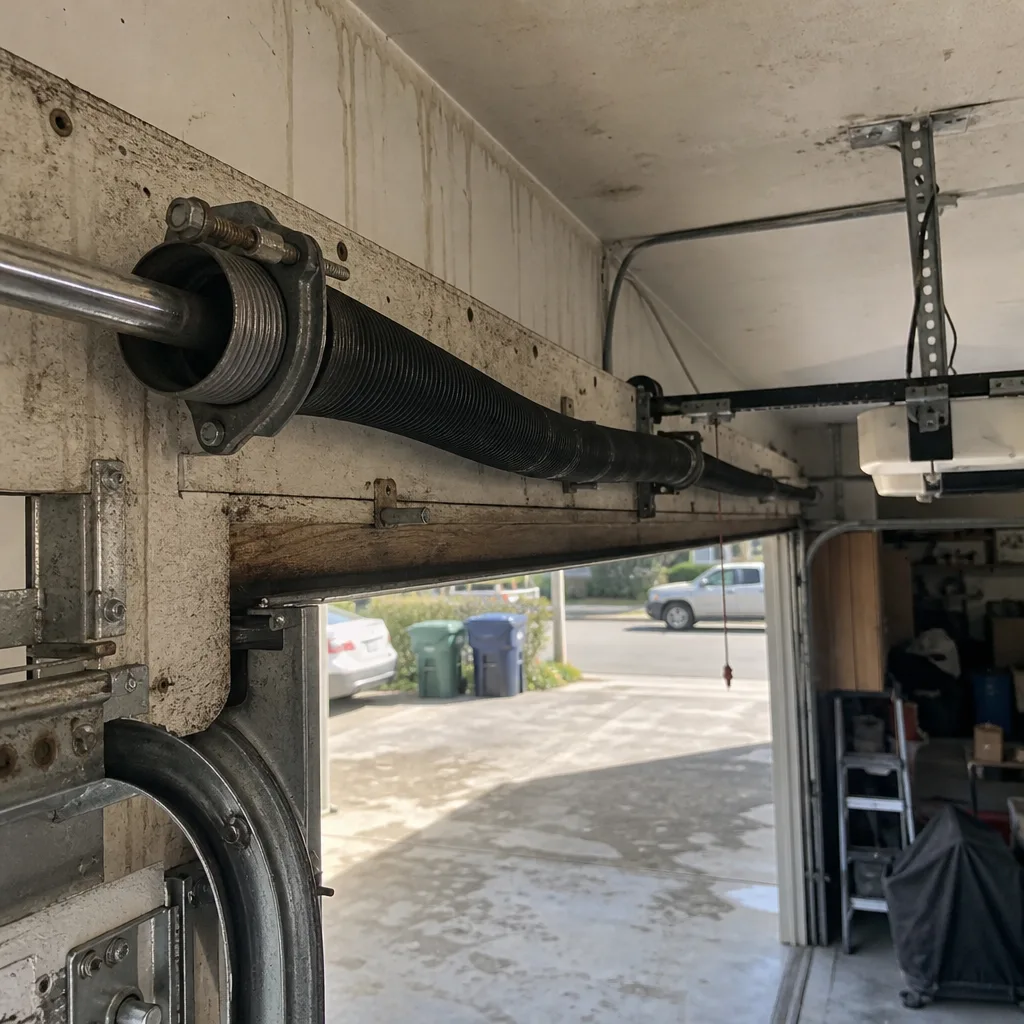 Before
 After
After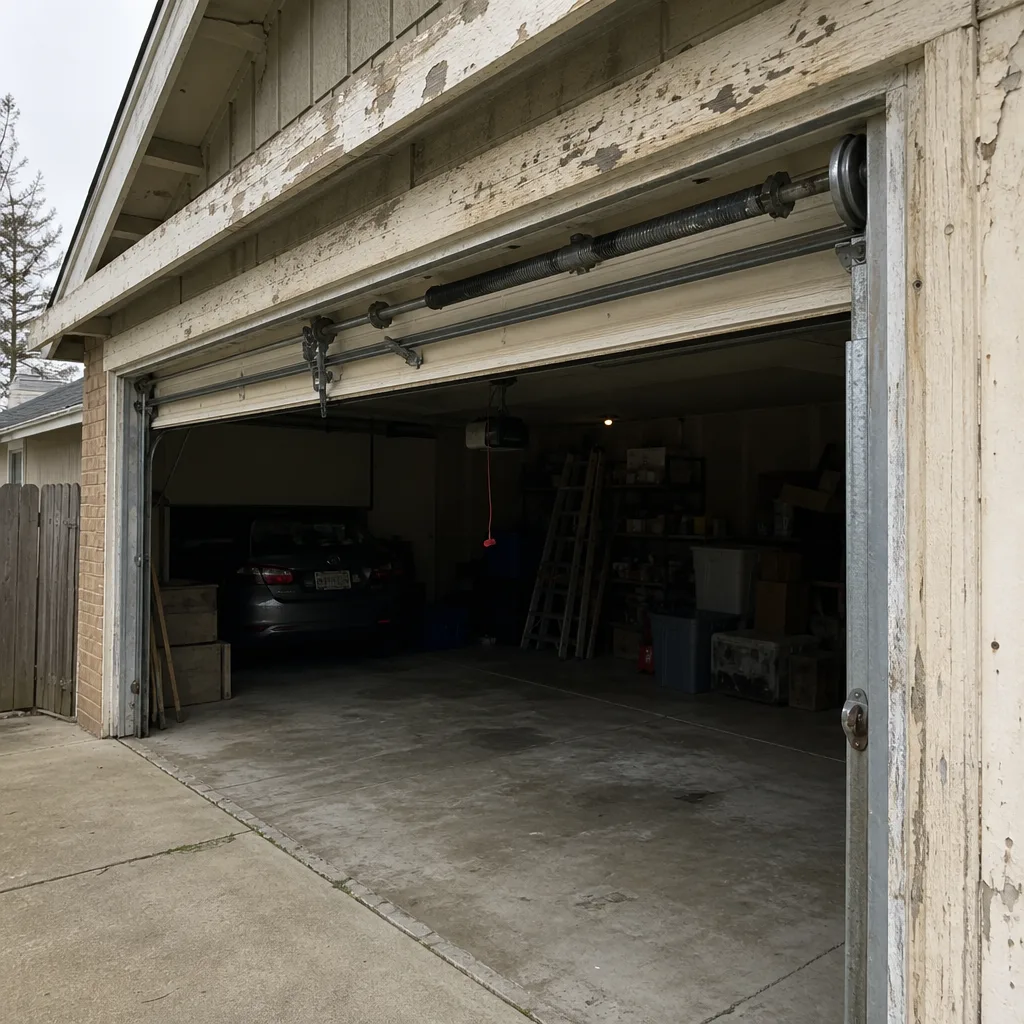 Before
 After
AfterWhen to Call a Professional
Call a professional if you observe any of the following: a visible gap in the torsion spring, fraying or kinked lift cables, a door that reverses before touching the floor, a door that won’t stay at half-open position, a persistent grinding sound, visible track misalignment, or an opener light blinking in a consistent pattern. These conditions indicate components under load are failing, and the failure mode is usually sudden. Do not attempt to adjust springs, cables, or tracks yourself. Bramwell Garage Doors San Jose offers free estimates in San Jose – call (669) 444-4253 and a live person will answer, day or night. The technician arrives in a stated window, delivers a written price before any work begins, and backs every repair with the written 365-Day Done Right Promise.
Frequently Asked Questions
Most garage door repairs in San Jose run between $85 and $340 depending on the component. A roller replacement is typically $85 to $160. A cable replacement runs $120 to $200. A torsion spring replacement runs $180 to $340. Opener repairs run $100 to $220, while a full opener replacement is $300 to $600 installed. These are the prices you should expect from a quality provider – the written price is delivered before any work starts, and the invoice matches the number you approved. Call (669) 444-4253 for an exact quote – estimates are free.
Yes. We answer the phone 24 hours a day, 7 days a week, and we provide same-day service in San Jose for urgent repairs – snapped springs, doors off their tracks, and doors that will not close. A live person answers the phone, not a voicemail tree, and you will have a stated arrival window before the technician is dispatched. Call (669) 444-4253 and we will get a technician to you today.
No. The written price you receive before any work begins is the price on the invoice. That is one of the four Kingswell standards every Bramwell location has agreed to: written price, real arrival window, clean job site, and written guarantee. If an unexpected issue is found during the repair, the technician explains it and provides a written update before any additional work is done. The number never changes at the door without a conversation and your approval.
It depends on the source of the noise. If the grinding is from worn rollers, you can generally keep using the door for days or weeks while you schedule the repair, though the longer you wait the more secondary wear you cause. If the grinding is accompanied by the door shuddering, hesitating, or reversing, stop using the door and call a professional. The difference is whether the load-bearing components are affected. When in doubt, take a video and call us – we can often give a preliminary read over the phone.
Most torsion springs are rated for 10,000 to 15,000 cycles, which works out to 7 to 10 years for a door opened four times a day. San Jose’s temperature swings shorten that somewhat in inland neighborhoods like Evergreen and Almaden because the daily expansion-contraction counts as extra thermal cycles. Extension springs on pre-2005 doors last about 5 to 8 years. If your springs are past these ages and you notice a squeal or the door creeping down at half-open position, schedule an inspection before they fail completely.
Yes. We are authorized to service all major brands, including LiftMaster, Chamberlain, Genie, Raynor, Amarr, Wayne Dalton, Craftsman, and Clopay. If your door or opener is a brand not on that list, we can still service it – we stock universal parts and have access to brand-specific components. Call (669) 444-4253 and tell us what’s on the door; we’ll tell you whether we have the parts on the truck before we arrive.
The Bottom Line
Your garage door is the largest moving object in your home, and it talks to you constantly – through the sounds it makes, the way it moves, and what you can see when you look at it. The warning signs that matter most are a spring gap, fraying cables, a reversing door, a door that won’t hold at half-open, and a two-second hesitation before movement. Each one has a specific cause, a specific repair window, and a predictable cost in San Jose between $85 and $340 if caught early. The homeowner who listens to the door and calls before the failure saves money, avoids a day with a disabled garage, and eliminates the safety risk of a door that weighs as much as a person but behaves like a falling appliance. If this guide has helped you recognize a warning sign in your own door, call (669) 444-4253 – a free estimate, a written price, and a written guarantee are waiting on the other end of the line. That’s how we’ve done it since 2001, and it’s the only way we work.
Written by Marcus Ellery, Owner at Bramwell Garage Doors San Jose, serving San Jose since 2001.