
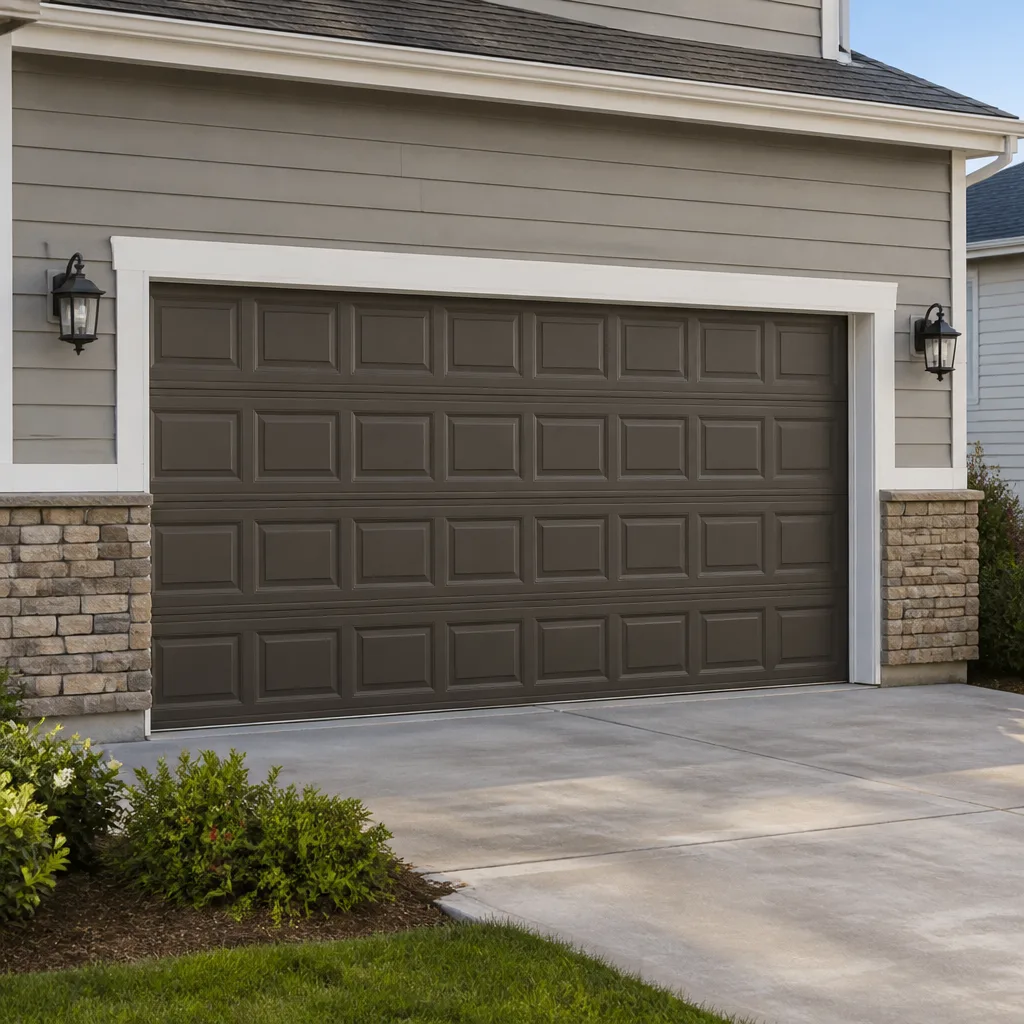
 Raised-panel steel
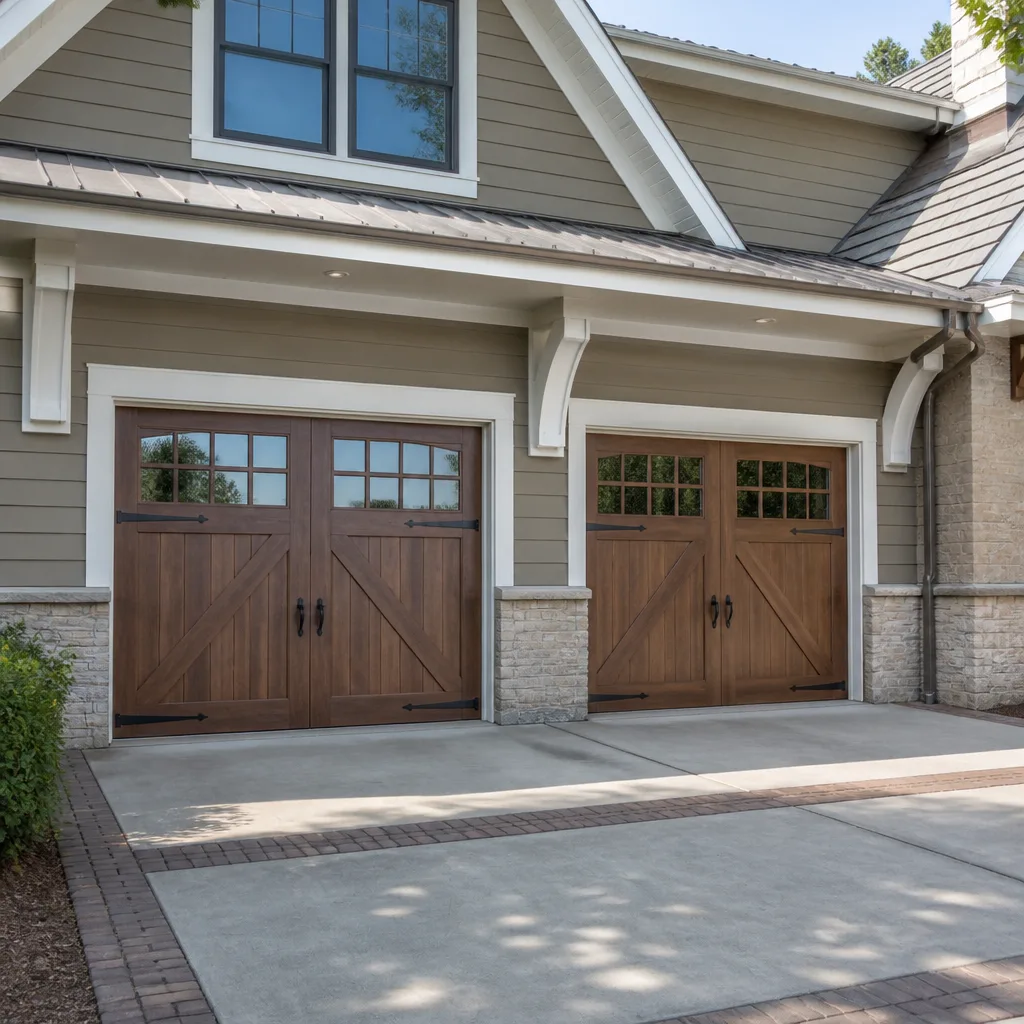 Carriage house
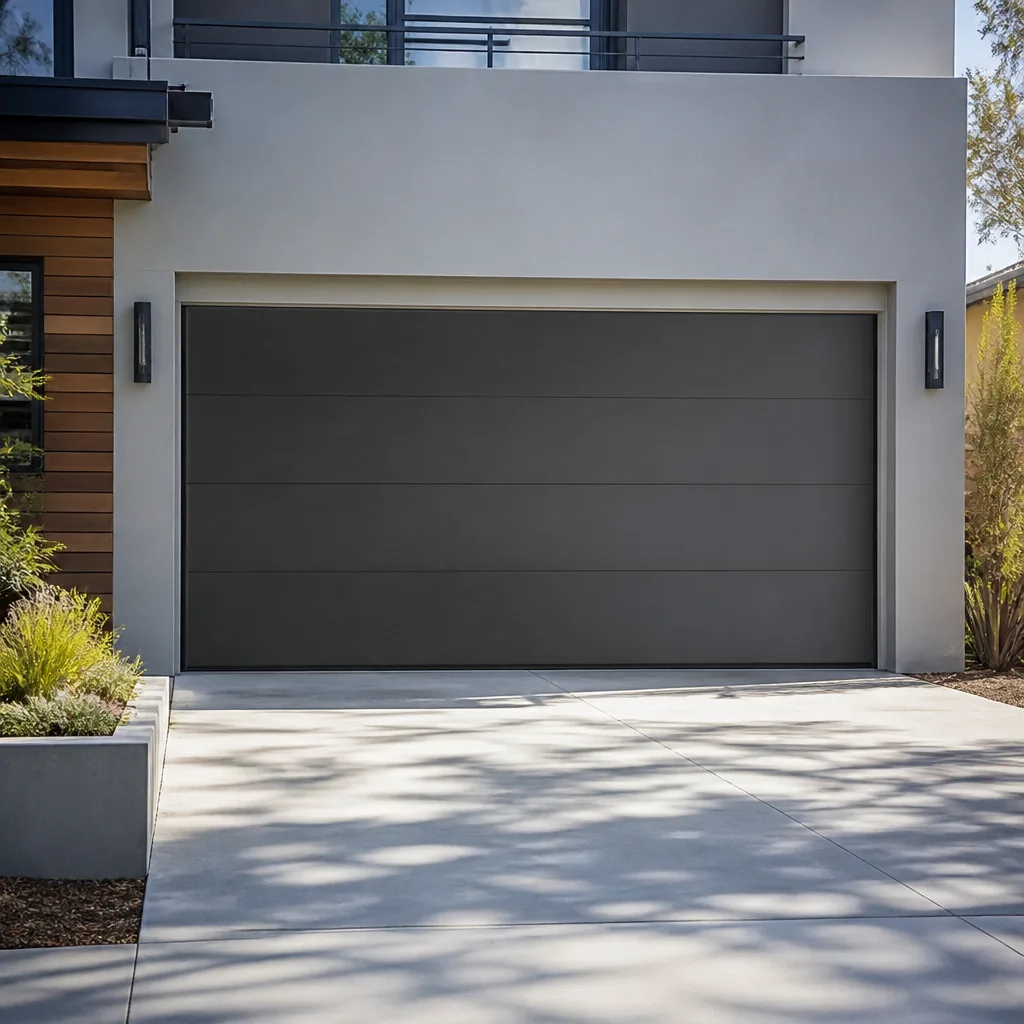 Modern flush
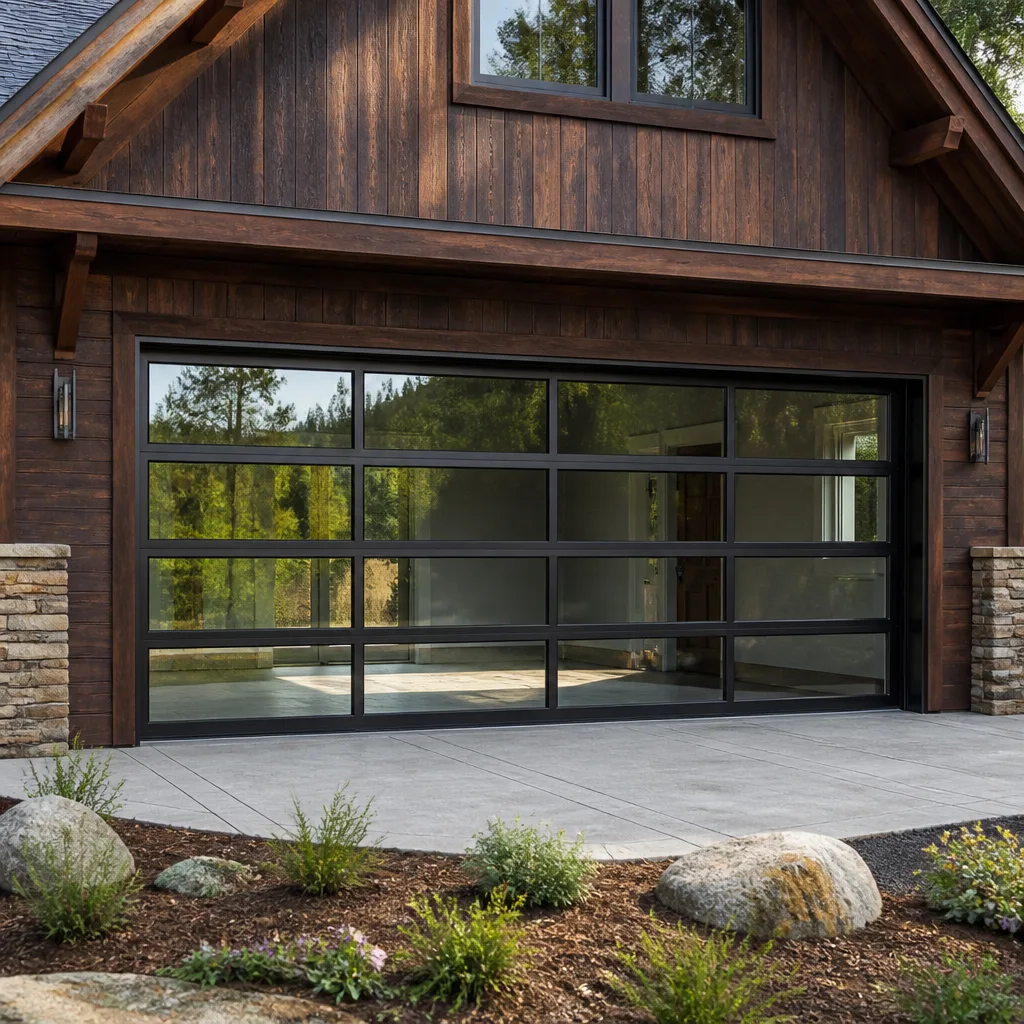 Full-view glass
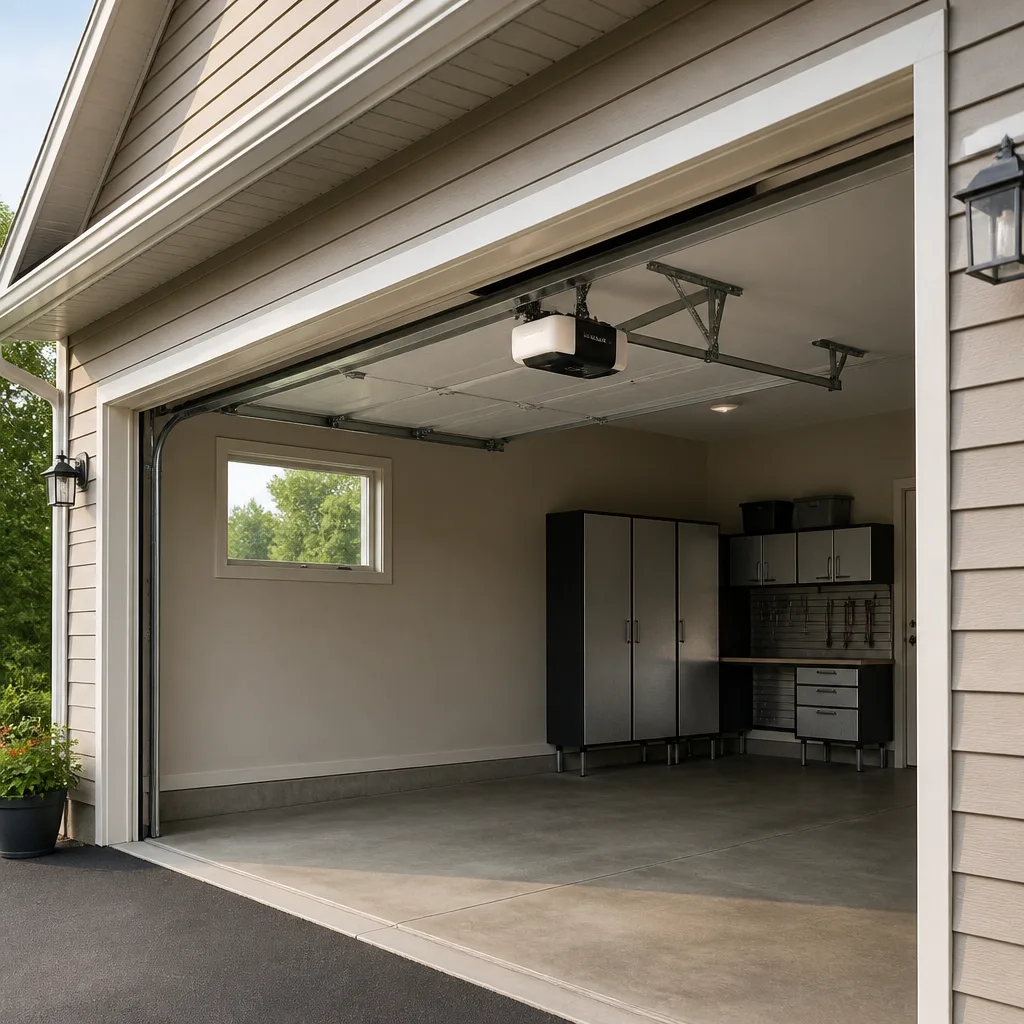 LiftMaster openers
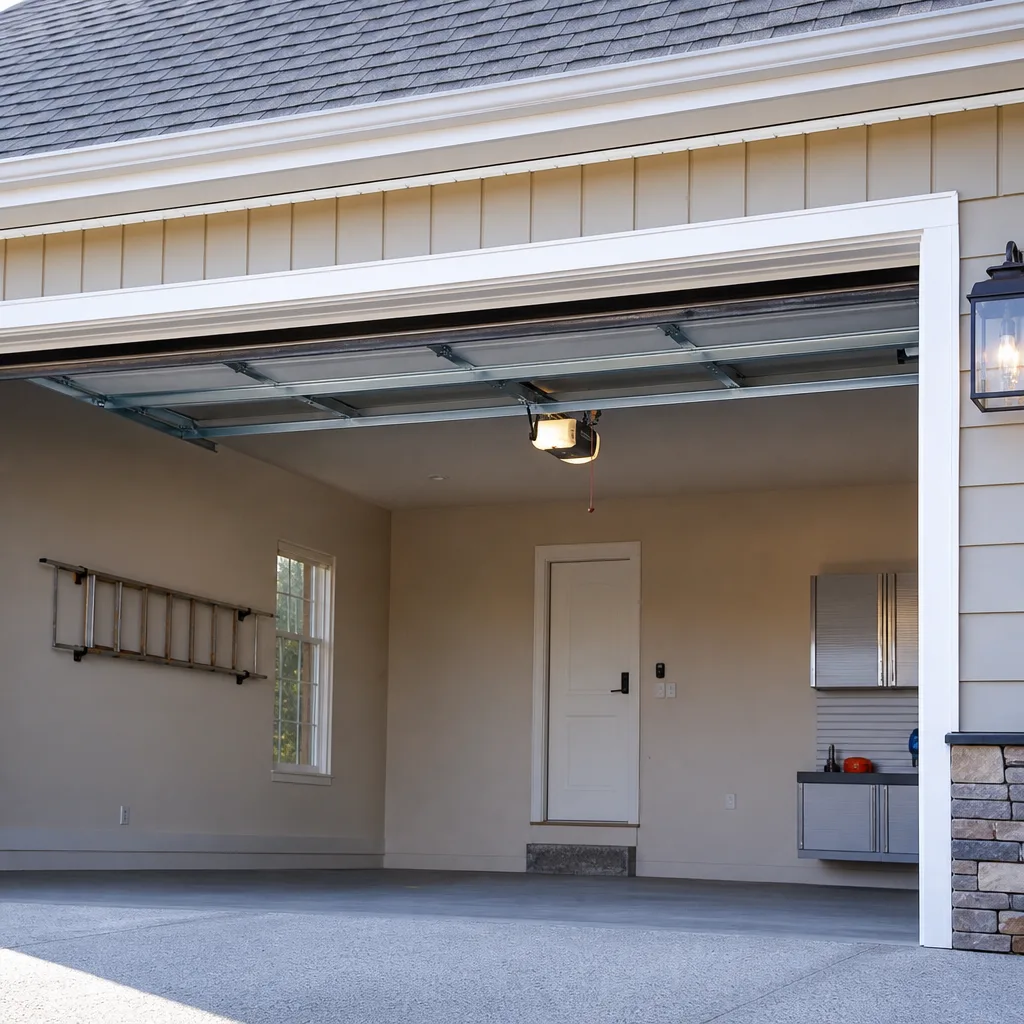 Chamberlain openers
Full 25-point door and opener safety check with every visit - springs, cables, rollers, tracks, and your LiftMaster or Chamberlain opener included
You get a price before we start. It does not change when the truck arrives.
Get your free estimateGenie Torsion Spring Replacement: The San Jose Owner’s Guide
If your Genie garage door won’t lift, or it slams down the moment you release it, the torsion spring has almost certainly failed. In San Jose, a Genie-compatible torsion spring replacement typically runs $210 – $400 installed, parts and labor included, and our trucks carry the common sizes needed for same-day service. The spring is the heavy coil mounted horizontally above the closed door – it stores the lifting force, so when it snaps, your opener motor is trying to dead-lift a 150-pound door by itself, which it was never built to do.
Most San Jose homeowners discover the spring has failed one of two ways: a loud bang from the garage that sounds like a car backfiring, or a door that suddenly feels like it weighs 400 pounds when you try to open it manually. Both mean the same thing – the spring’s service life is over, and the door needs a matched replacement before the opener burns itself out trying to compensate.
Which Genie Models This Applies To
Genie has manufactured torsion-spring residential doors for decades, and the spring spec depends less on the opener model and more on the door itself: its weight, height, and track style. That said, we regularly replace torsion springs on doors paired with Genie IntelliG, ChainDrive 500/700/1000, ReliaG, and SilentMax openers across San Jose. The opener brand doesn’t change the spring math – but the spring’s failure does change how hard your Genie opener works, and that’s the connection most people miss.
Here’s the compatibility gotcha worth knowing if you’re sourcing the part yourself: Genie doors use standard industry torsion spring wire diameters, but the spring must be matched to the door’s weight and the spring’s inner diameter – typically 1.75-inch or 2-inch ID on residential setups – not to the Genie model number. Two neighbors on the same San Jose street can both have “Genie garage doors” and need completely different springs because one door is insulated steel and the other is uninsulated aluminum. We measure the old spring’s wire gauge, coil count, and inside diameter on site, then match the replacement to the actual door weight. For OEM purity, Genie-branded springs do exist; in practice, we stock high-grade aftermarket equivalents made to the same spec, which is what most San Jose shops install because the metallurgy is identical and availability is far better.
Styles & brands we work with
Signs Your Genie Torsion Spring Replacement Is Failing
- The door opens a few inches, then stops. The spring has lost enough tension that the opener’s force sensor trips and reverses. This isn’t an opener problem – it’s the spring telling you it’s done.
- You can see a visible gap in the coil. Torsion springs don’t always snap clean in two. A two-inch separation in the coil means the spring has fractured and is doing zero work. The door is now dead weight.
- The door slams down hard when closing. A healthy spring controls the door’s descent. When tension is failing, gravity takes over – this is dangerous and gets worse every cycle.
- One side of the door sits higher than the other when open. On two-spring systems (standard on doors 16 feet wide and most double doors in San Jose), one spring fails first. The remaining spring tries to compensate and you see uneven lift.
- The opener runs but the door barely moves. Your Genie opener’s motor is screaming, the belt or chain is working, but the door won’t budge. The motor’s RPMs are fine – the spring isn’t counterbalancing the load anymore.
See the difference
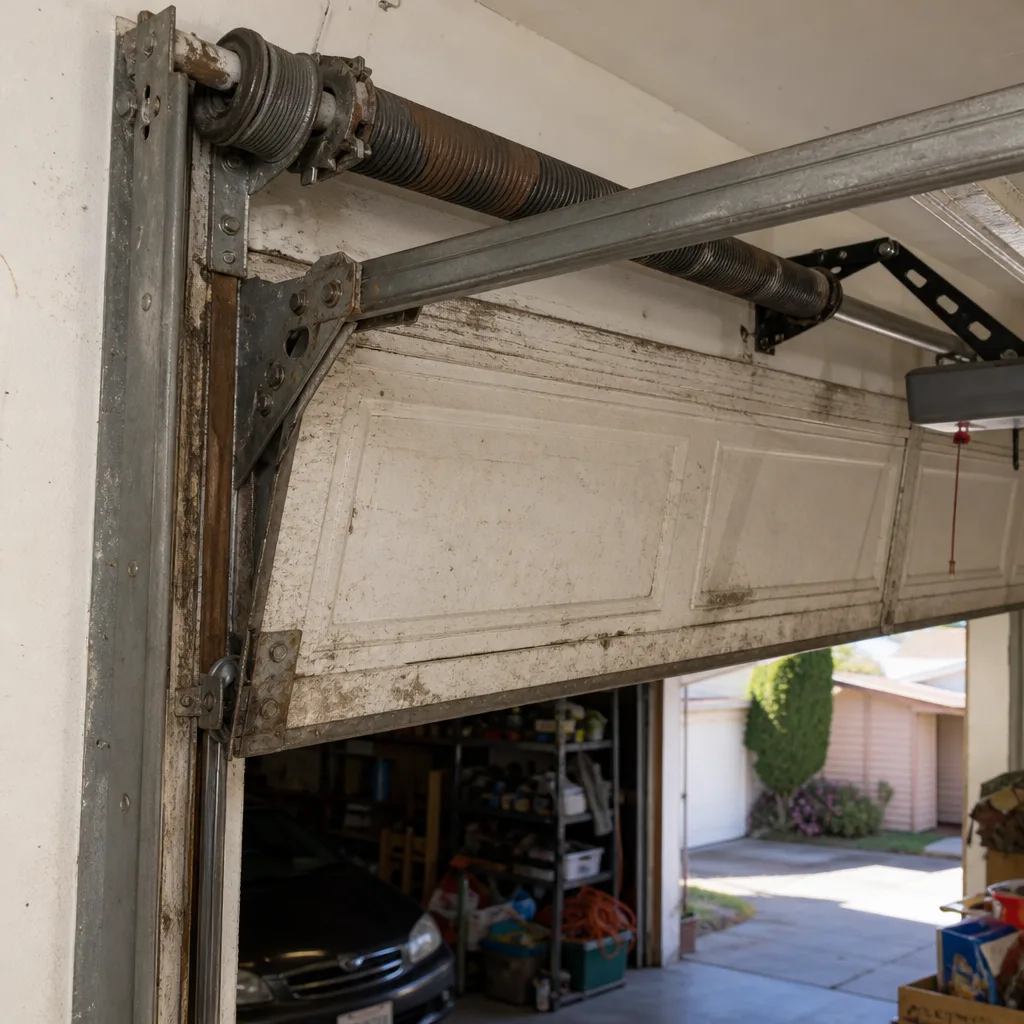 Before
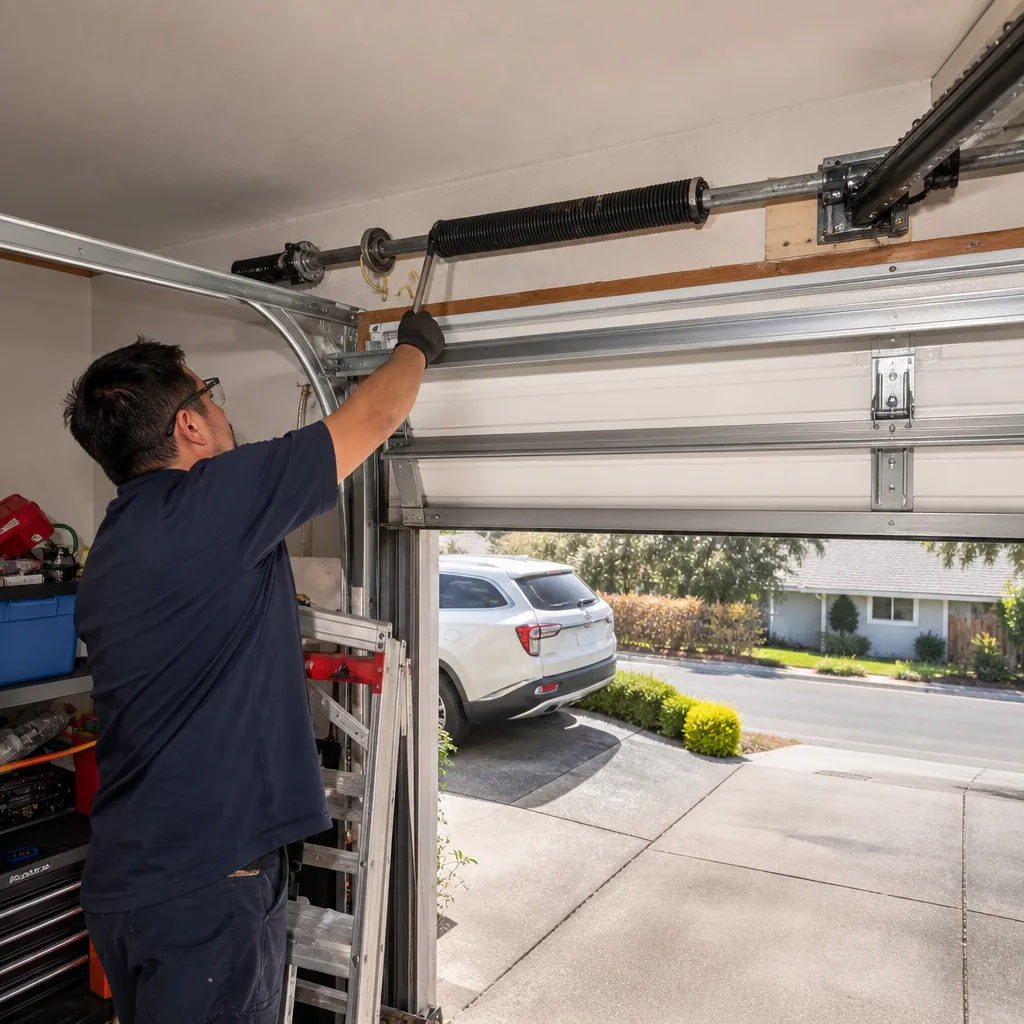 After
After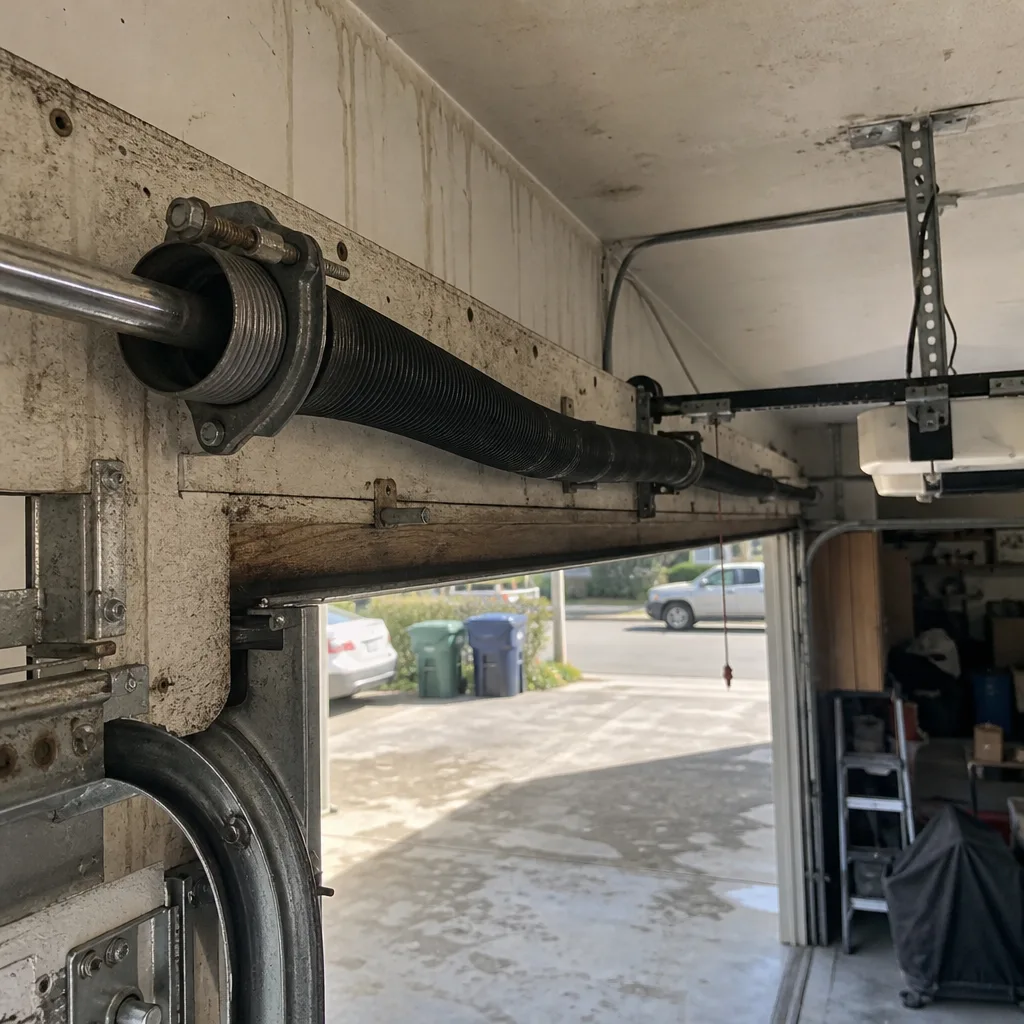 Before
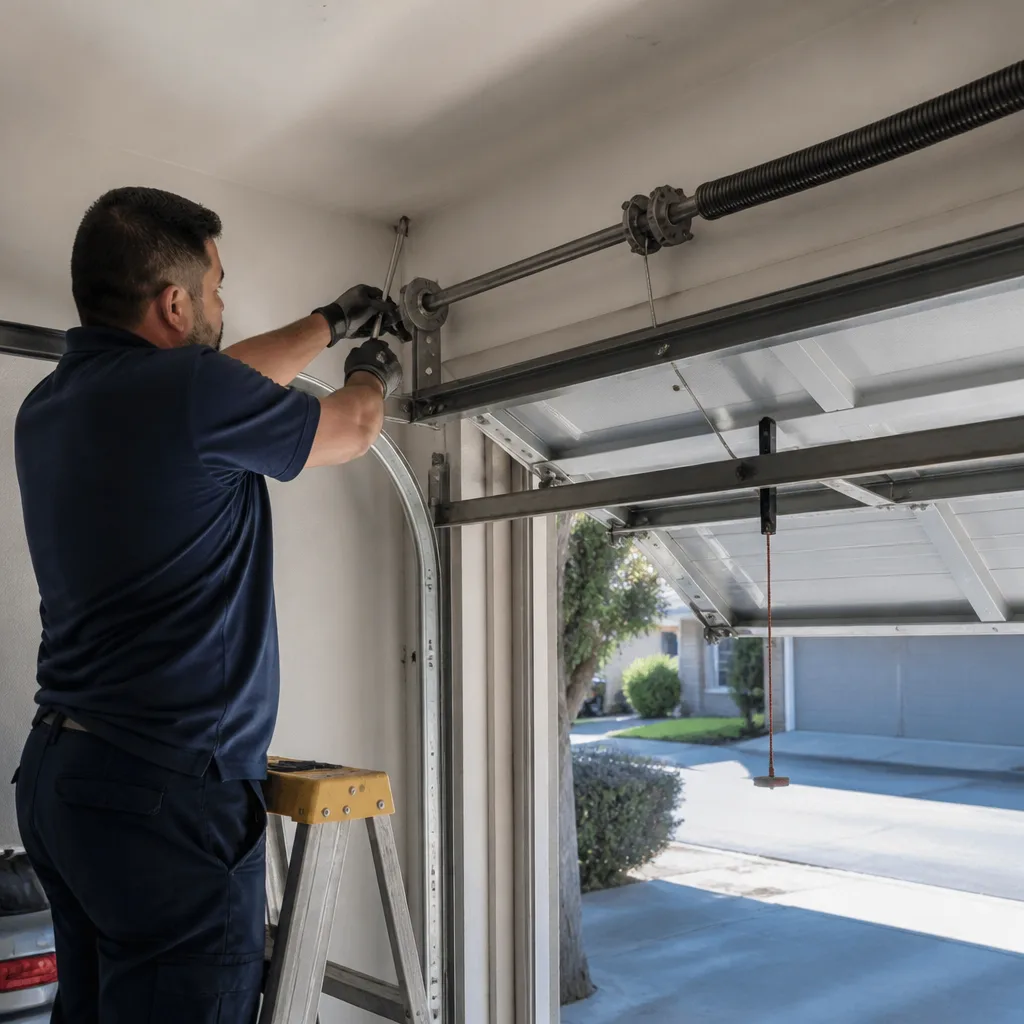 After
After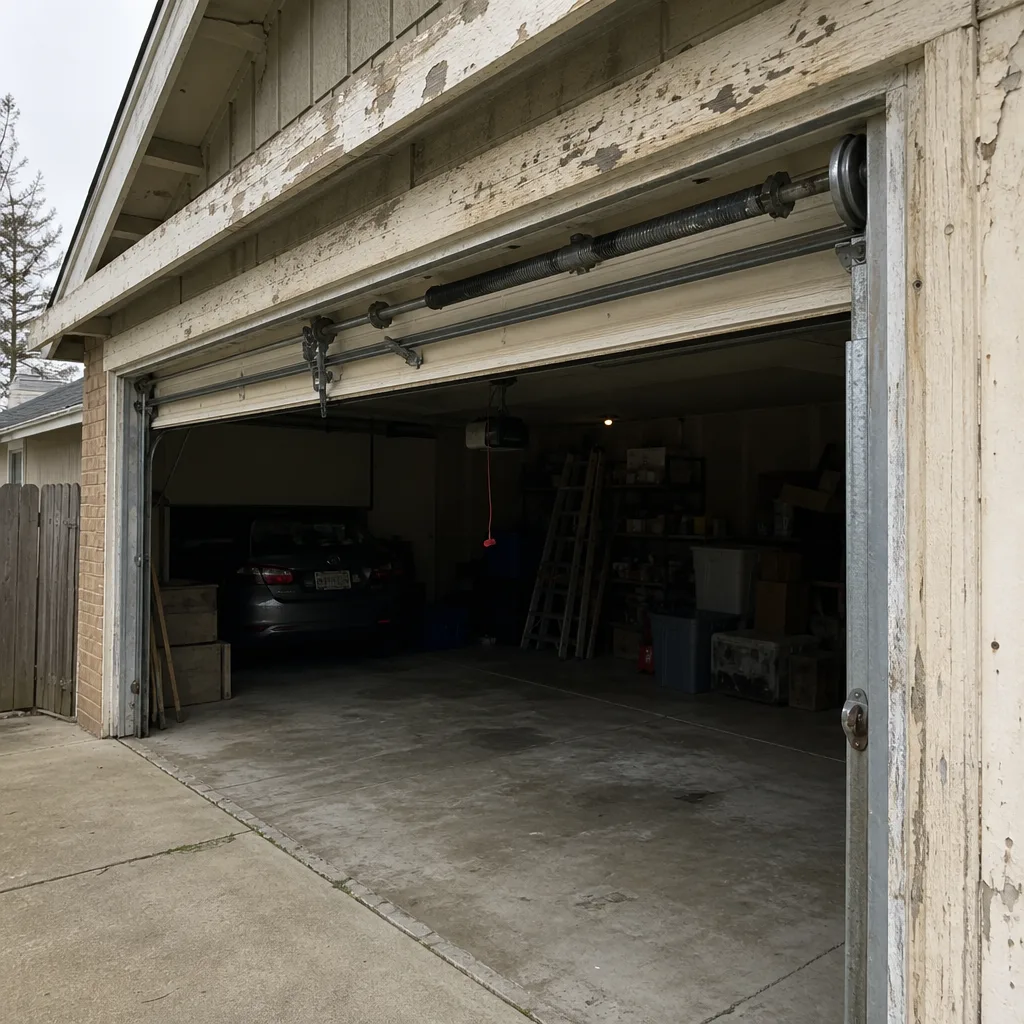 Before
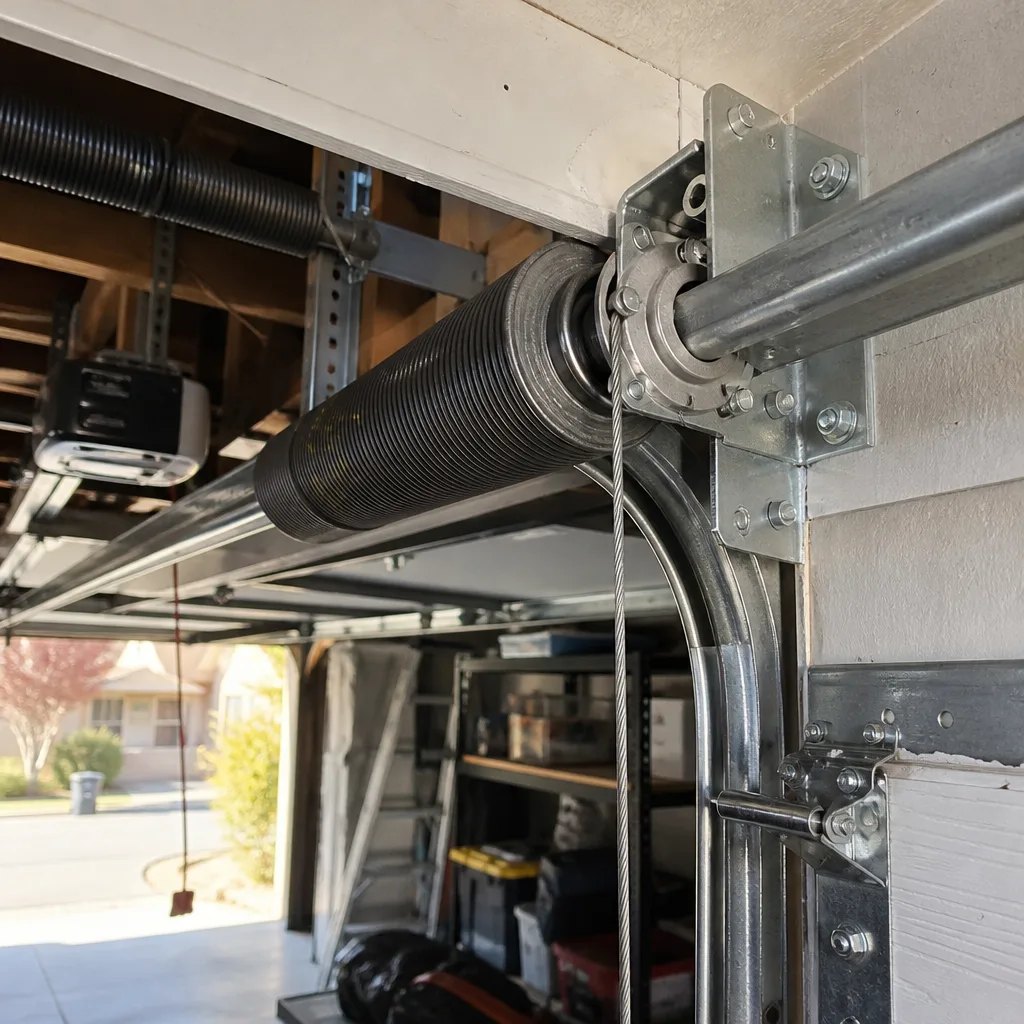 After
AfterReplacement Cost & What’s Included
For San Jose homeowners, a Genie-compatible torsion spring replacement runs $210 – $400 installed. That’s the full price: the spring, all labor, and the written Kingswell Guarantee. What moves you within that range is the spring’s wire diameter and length (heavier doors need beefier springs, which cost more), whether it’s a single-spring or double-spring setup, and whether we’re replacing one spring or both. On a double-spring door, we recommend replacing both even if only one snapped – the second is the same age, the same cycle count, and statistically weeks away from failing. The price you hear is the price on the invoice. We hand you a written quote before any tool comes out of the truck, and nothing changes once the work starts. Every torsion spring we install in San Jose carries the 365-Day Done Right Promise: if that spring fails inside a year, we come back and fix it at no charge – in writing, not just said at the door.
DIY or Call Us?
Let’s be straight about this: torsion springs are the one garage door component we tell every San Jose homeowner not to touch. They’re wound under extreme tension – enough stored force to break bones or worse if the winding bar slips. There’s no safe shortcut, and this is not the place to learn from a YouTube video. What you can do safely: check if the spring has a visible gap, note whether the door’s balanced when opened halfway (it should hold position, not drift), and call us with that information.
Most Genie torsion spring replacements in San Jose take 45 – 75 minutes once we’re on site. Our trucks stock the common spring sizes and wire gauges, so same-day service is realistic for the vast majority of homes in Willow Glen, Almaden Valley, Cambrian, and East San Jose. Call (669) 444-4253, tell us what the door’s doing, and we’ll give you a straight answer and a real arrival window.
FAQs
Most torsion springs are rated for 10,000 cycles, which translates to 8 – 12 years of daily use for a typical San Jose homeowner. If your door opens 4 – 5 times a day, you’re adding roughly 1,500 cycles a year. Coastal-influenced humidity and temperature swings in the Bay Area can shorten that lifespan slightly compared to drier inland climates, but the cycle count is the real clock.
No – a snapped or fractured torsion spring cannot be welded, spliced, or patched. The metal has fatigue-failed and any “repair” would be dangerous and short-lived. Replacement is the only safe option, and it’s what every reputable San Jose door company does. We’ll show you the failed spring before we remove it so you can see exactly what you’re paying to replace. Call (669) 444-4253 and we’ll get you on the schedule.
A single torsion spring swap on a standard residential door takes about 45 minutes. Double-spring setups run 60 – 75 minutes. If we’re also replacing cables or checking the opener’s force settings while we’re there, budget up to 90 minutes total. You’ll know the price before we start, and the number won’t change when the job’s done.
Yes – our San Jose trucks inventory the most common spring sizes for Genie-compatible doors: 1.75-inch and 2-inch inner diameters, wire gauges from .207 to .250, and paired sets for double-wide doors. If you have an uncommon size or an older door with an unusual setup, we source the exact match same-day from our local Bay Area supplier network. Call (669) 444-4253 for a free estimate – we answer live, day or night.
Written by Marcus Ellery, Owner, Bramwell Garage Doors San Jose at Bramwell Garage Doors San Jose, serving San Jose and nearby areas.